#vietnam #travel #adventure
What an incredible last day we’ve had today. As we have come to expect from this trip, it was another day of two half’s. The morning was spent driving out of the city, back towards the border to Cambodia. We had a new (local) guide, who was absolutely brilliant, extremely knowledgeable, funny and very passionate about his country. He basically gave us an interesting, entertaining and amusing at times, history lesson on Vietnam.
 A little snap short of the morning rush hour in Ho Chi Minh.
This mornings lesson was based at Cu Chi Tunnels, an extensive tunnel complex that won the Vietnamese the war against America. Without these tunnels, things would have been very different for them. According to government figures, 2 million Vietnamese died in the war. They had already started building the tunnels years earlier during political unrest and some people lived in the tunnels for 27 years, some being born in them. During the conflict with America, 18 thousand troops were living in them to prepare for the Tet Offensive.
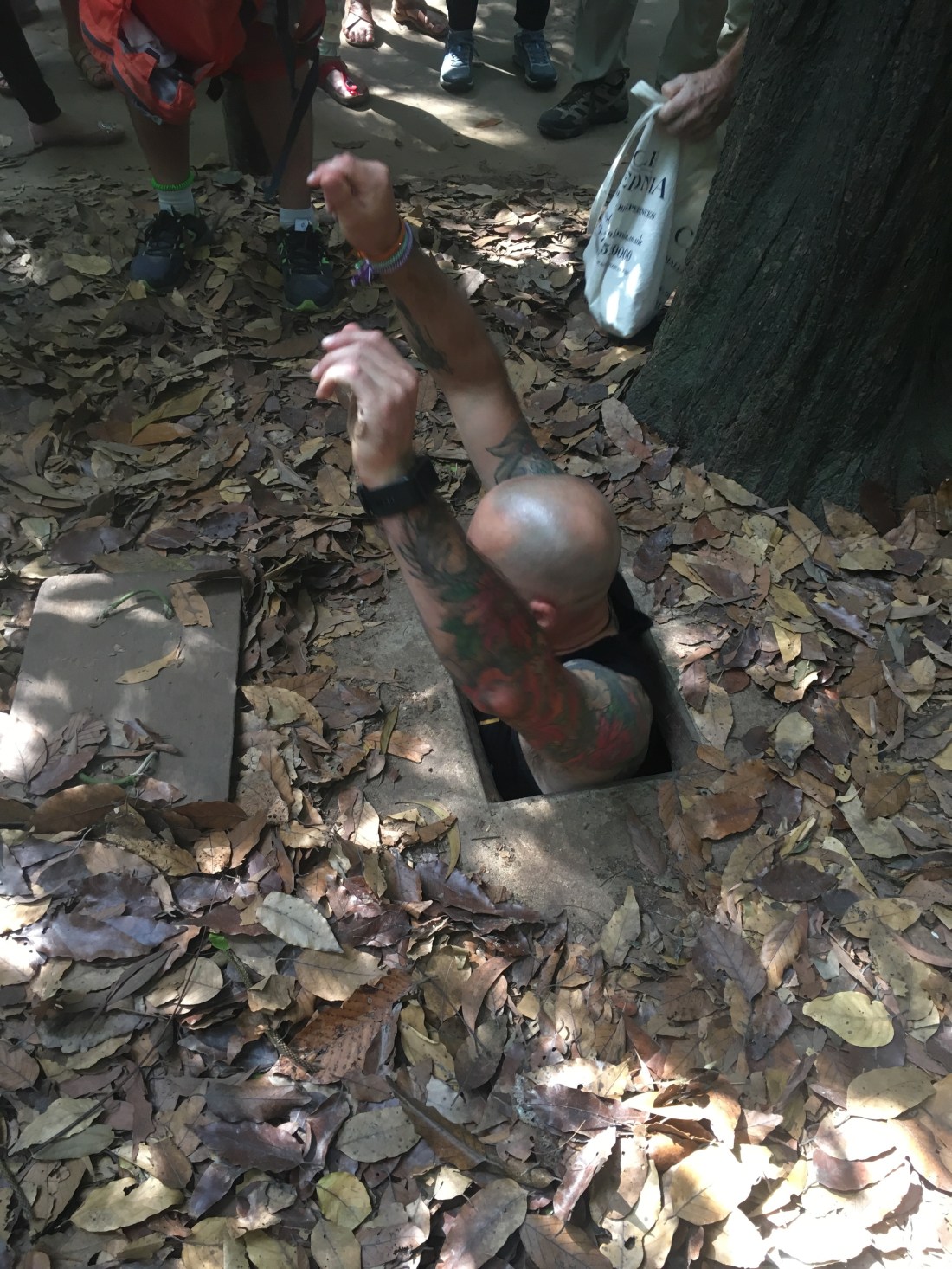
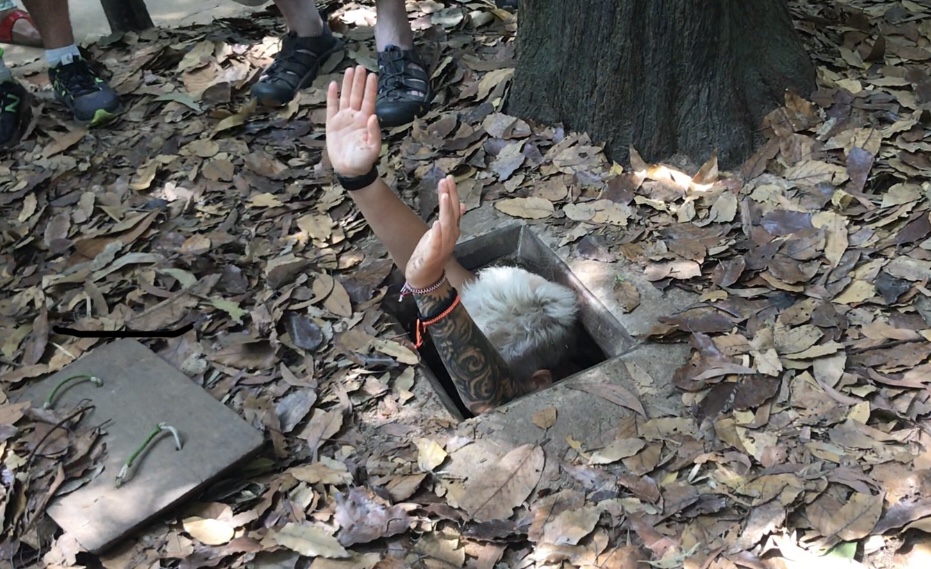
We were given a demonstration of how they would get in and out of the tunnels. And then we were offered a chance to try it for ourselves. Bloke managed it only by shimmying his shoulders through (across the corners! And I’m not big for a European :bloke) , the entrance is so small it doesn’t look feasable at speed. At only 30x20cm big fellas have no chance, especially given the GIs would be carrying kit and webbing through that wooden frame.

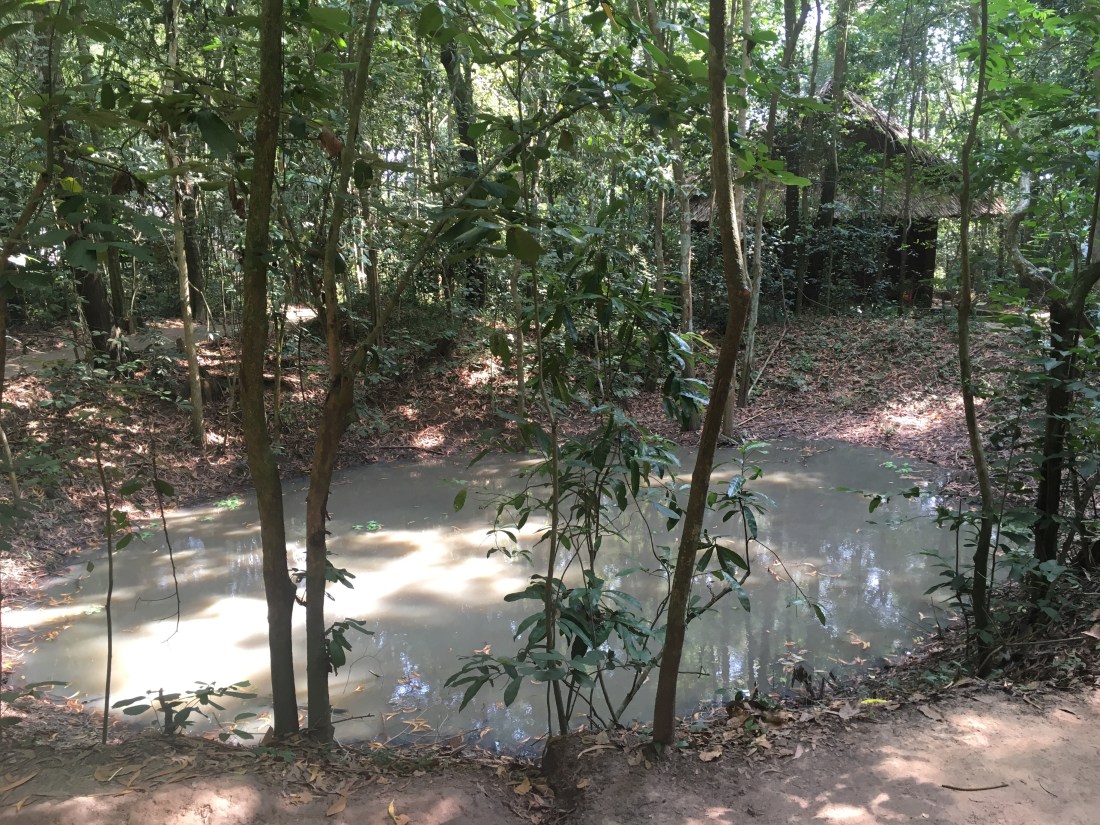 A bomb crater full off water
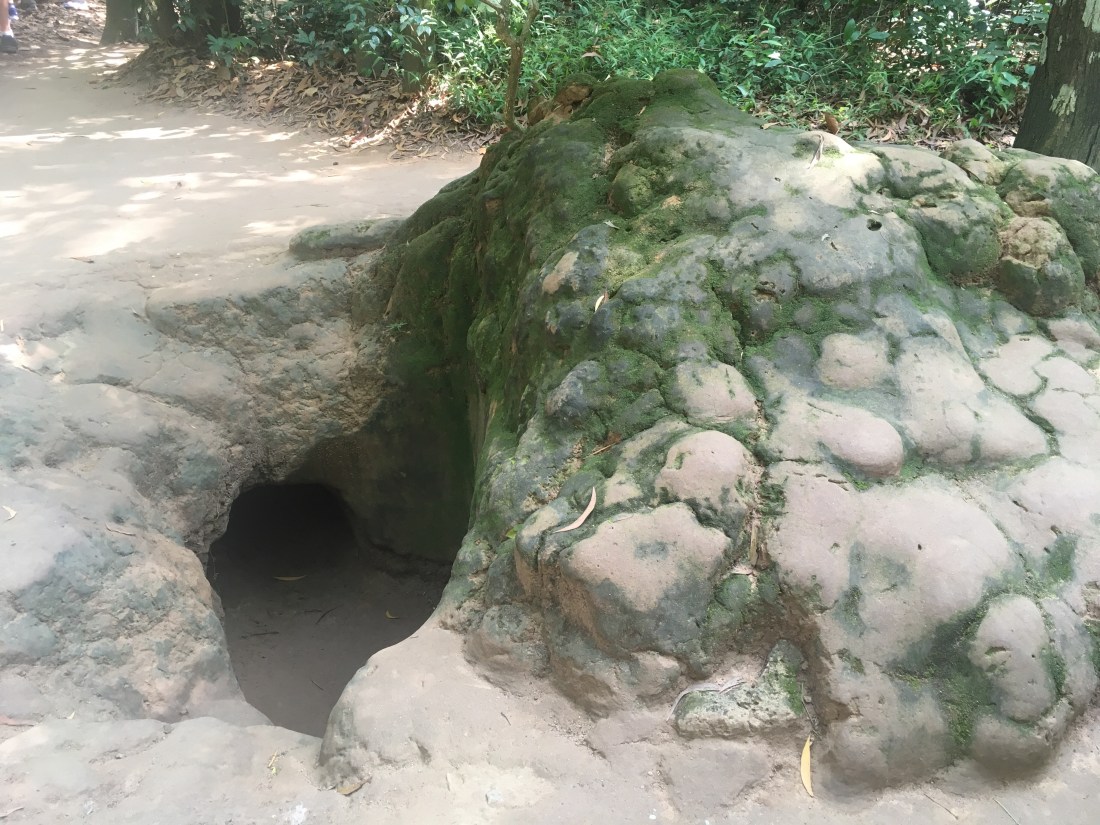 An entrance hole to another tunnel. The earth piled up to one side to make it look like a termite hill. This style was used as a bunker to attack and closed with a bomb to hide the VCs retreat.
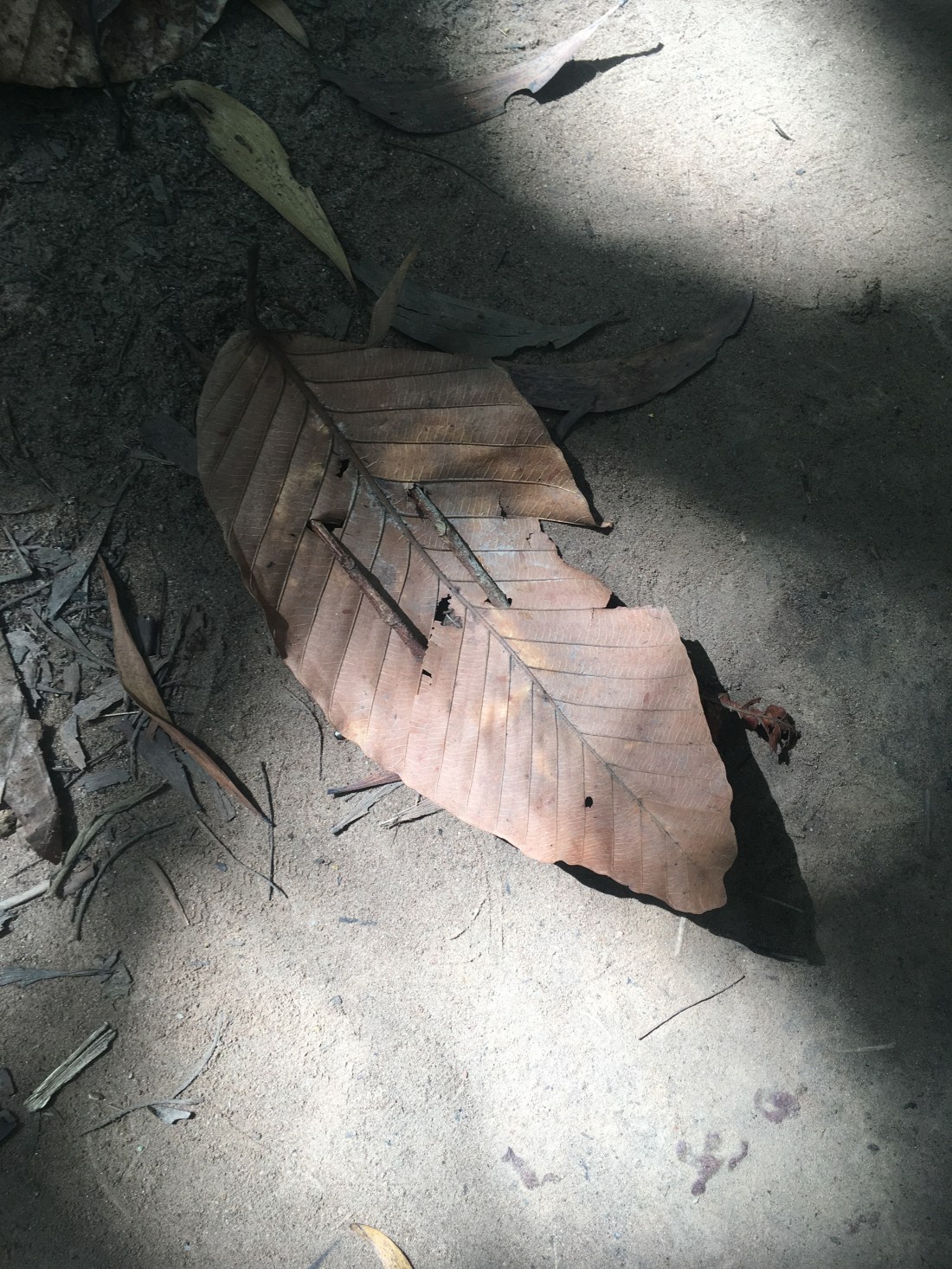 They would use leaves and sticks to make signals. One stick meant an entrance near by, two sticks meant it was booby trapped. The entrance to the tunnels were always by trees for three main reasons, a) it helped them to find them, b) the trees could be used to help them get in to the holes by running backwards, sliding down them and going in feet first, and c) made it harder for the enemy to find them if the weren’t out in the open.
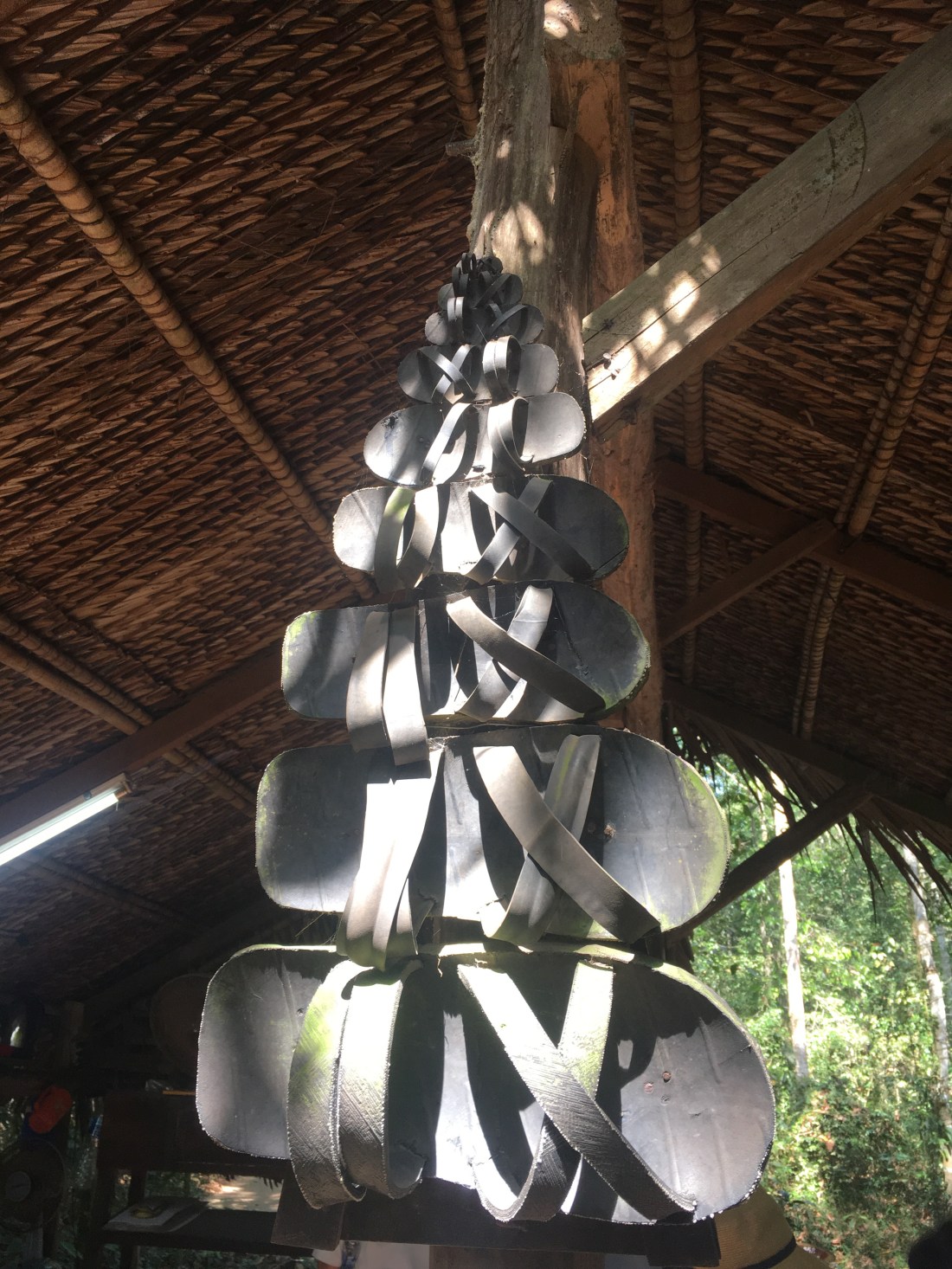 A collection of VC shoes – made from rubber tyres and designed so you could wear them backwards to make it look as if you were walking in the opposite direction.
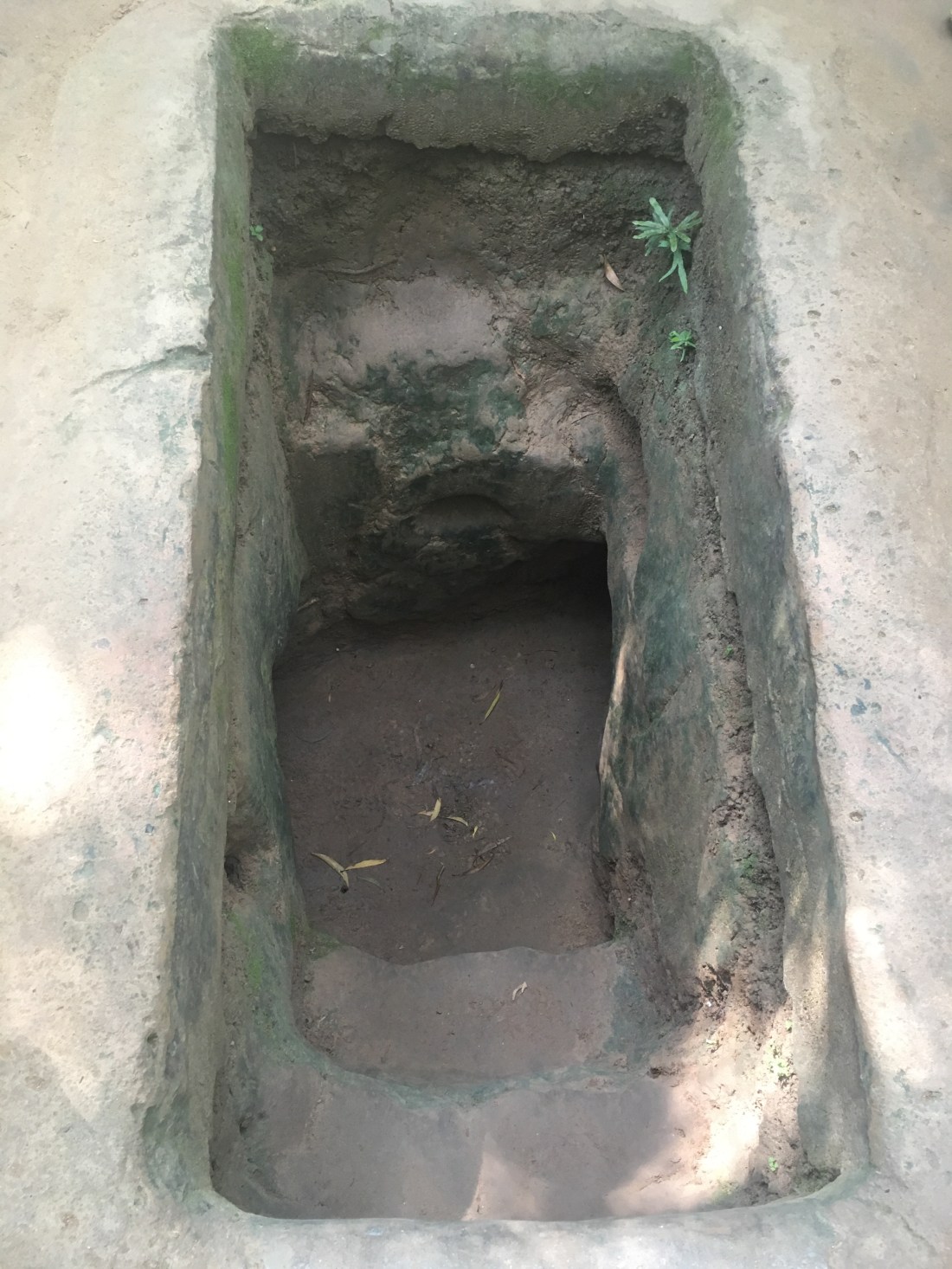 An entrance widened to show people how small the holes were, as demonstrated below. They have since widened some of the tunnels by 30% to be able to fit westerners down them, and even then they are still extremely tight.
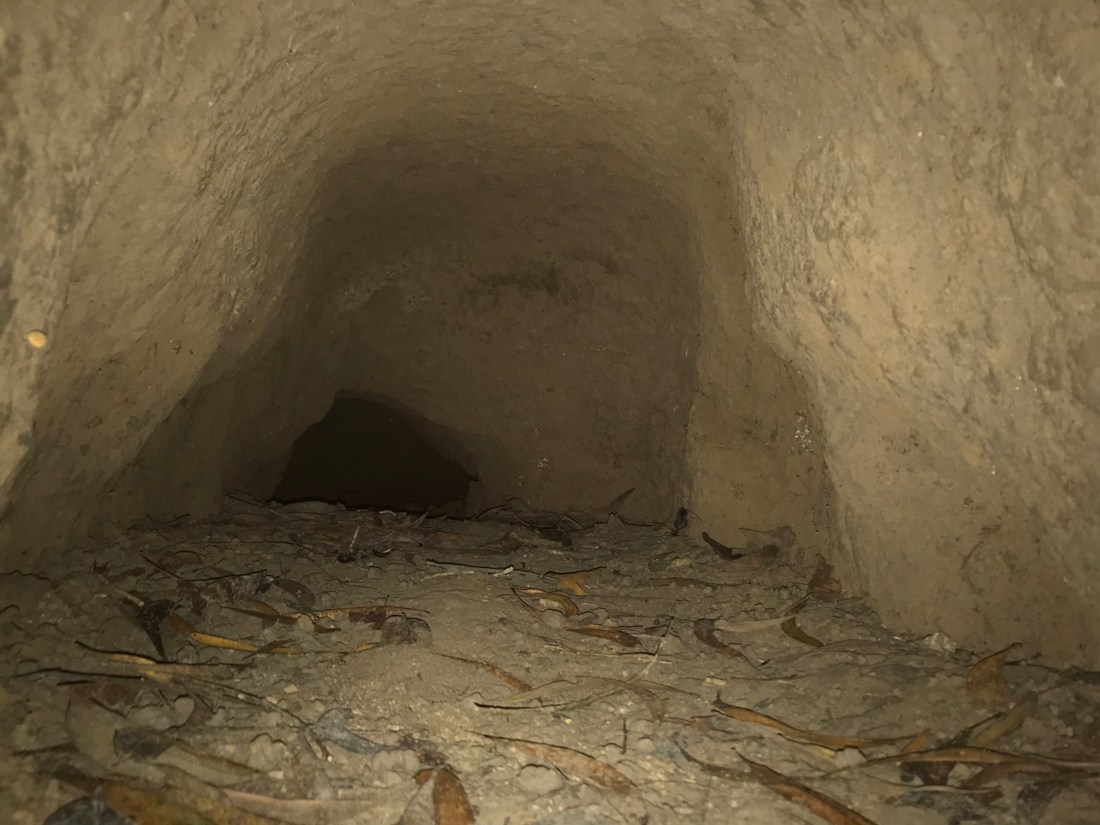

Throughout the tunnels they used chunks of bamboo to create breathing holes and airflow, these are “hidden” in plain sight in termite hills – invisible to the untrained eye. (Below) 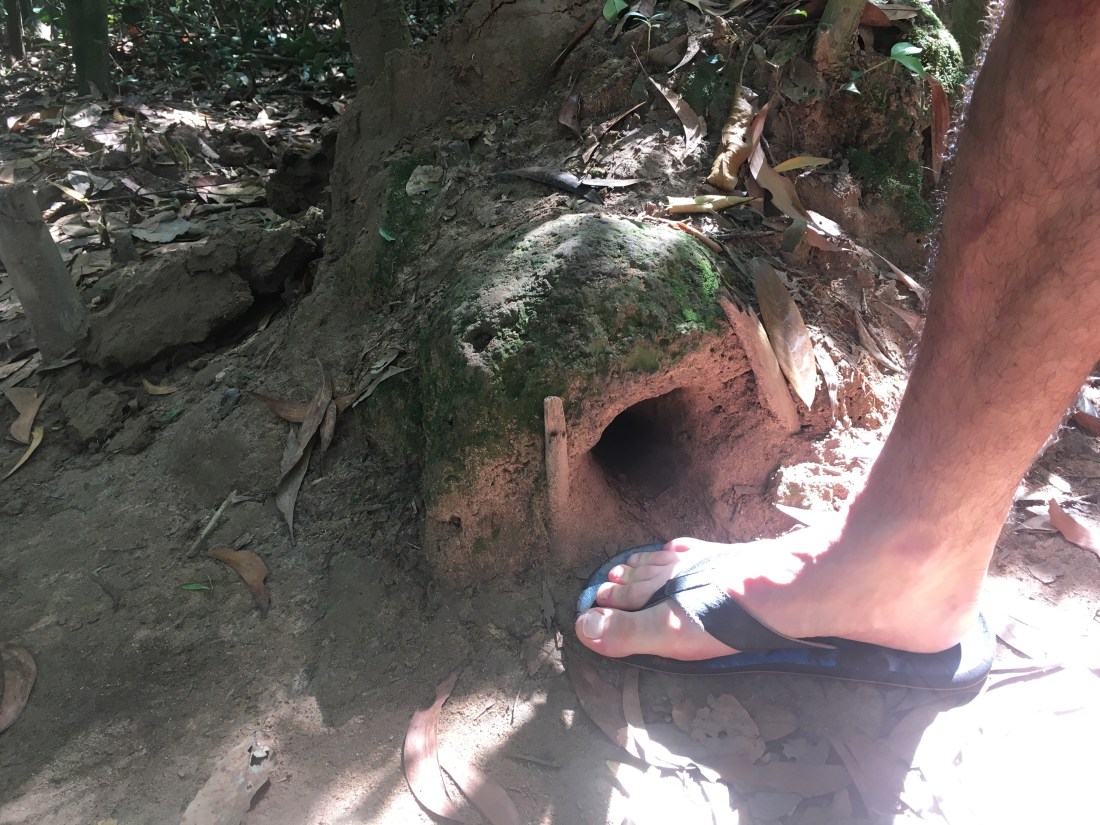 This picture shows how they created chimneys to let the smoke out from their tunnels, usually at least 100 metres away from the underground kitchen , and built to disperse the smoke low amongst the trees. (Below)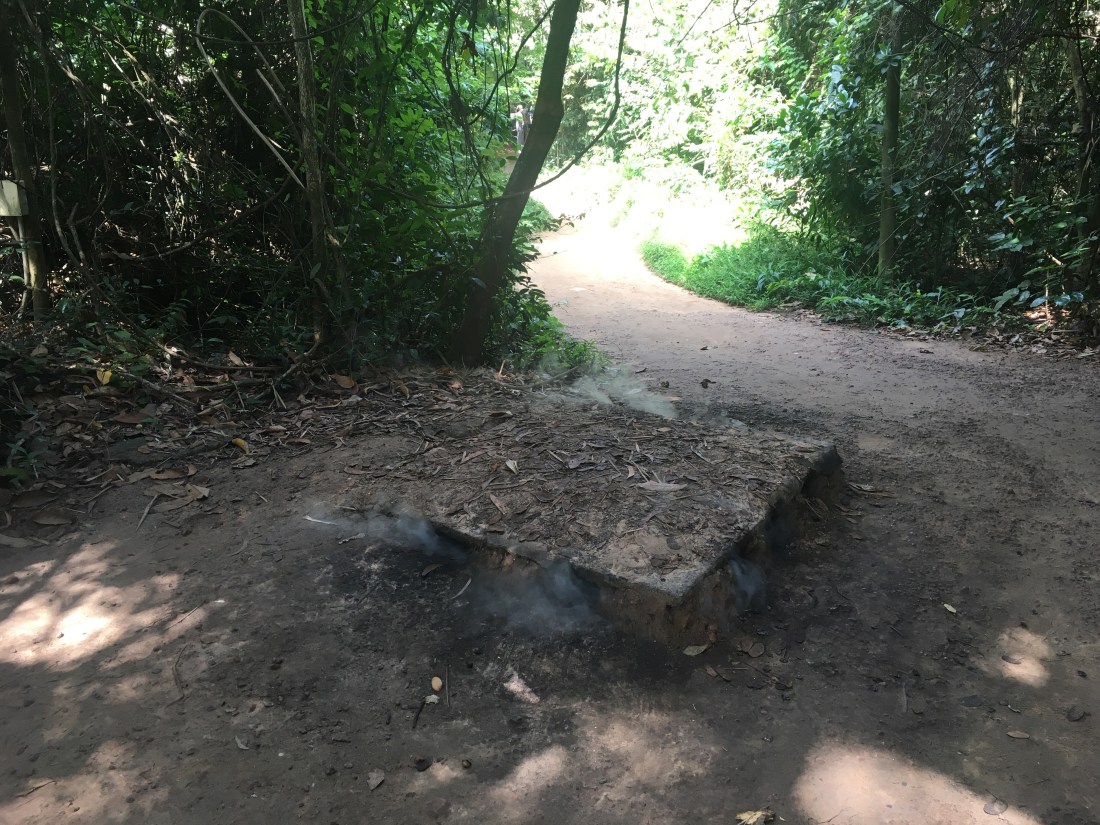
There was a 100 metre stretch of tunnel, widened as mentioned previously, that we could walk through. When I say walk through, it was more of a crouch and was so tight blokes shoulders were touching the wall on either side. We were warned that if anyone in the group was claustrophobic or had a heart condition or knee issues, we should either reconsider or try it in stages. The tunnel had exit points every 20 metres as it went increasing lower the further you went. I was pretty impressed with bloke as he had previously said he wouldn’t do it, but he gave it a go. In fact most of the group did, with only a couple (3 actually :bloke) opting not to try it, and I can’t say I blame them. I did the first 20 metres and that hurt my knees crouching down (and I’m only 5ft 4in on a tall day) but several of the group managed the whole thing. It’s extremely tight in there and dark despite the lights they have recently installed, it gives you some idea of what these tunnels feel like. I can’t imagine what it must have been like for the poor families living in them for years, let alone the men fighting from them. It was not a comfortable thing to do but certainly an interesting thing to experience.
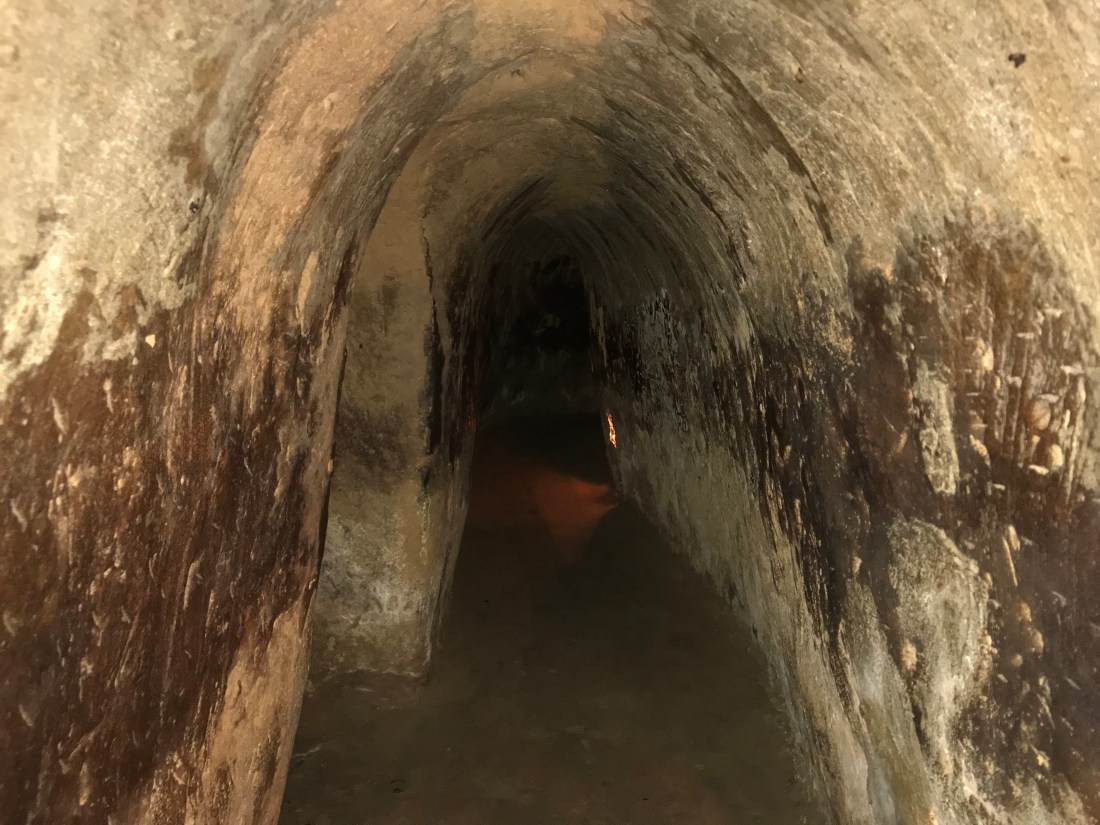


(I am actually standing in the next lower level of tunnel, ready to crouch and move forwards :bloke)
These next group of pictures depict the traps set into the forest and tunnels to impale the enemy. They were brutal to say the least, but they used what they had and that consisted of mainly the bomb casings dropped on them from the enemy. They showed us a copy of a workshop showing how they would refashion the bombs into their own weapons. The most dangerous job, understandably so, went to the men having to take apart the unexploded bombs. (The Americans dropped so much ordinance in this area that 1 cubic meter of soil would yield 2-3kg of shrapnel :bloke) .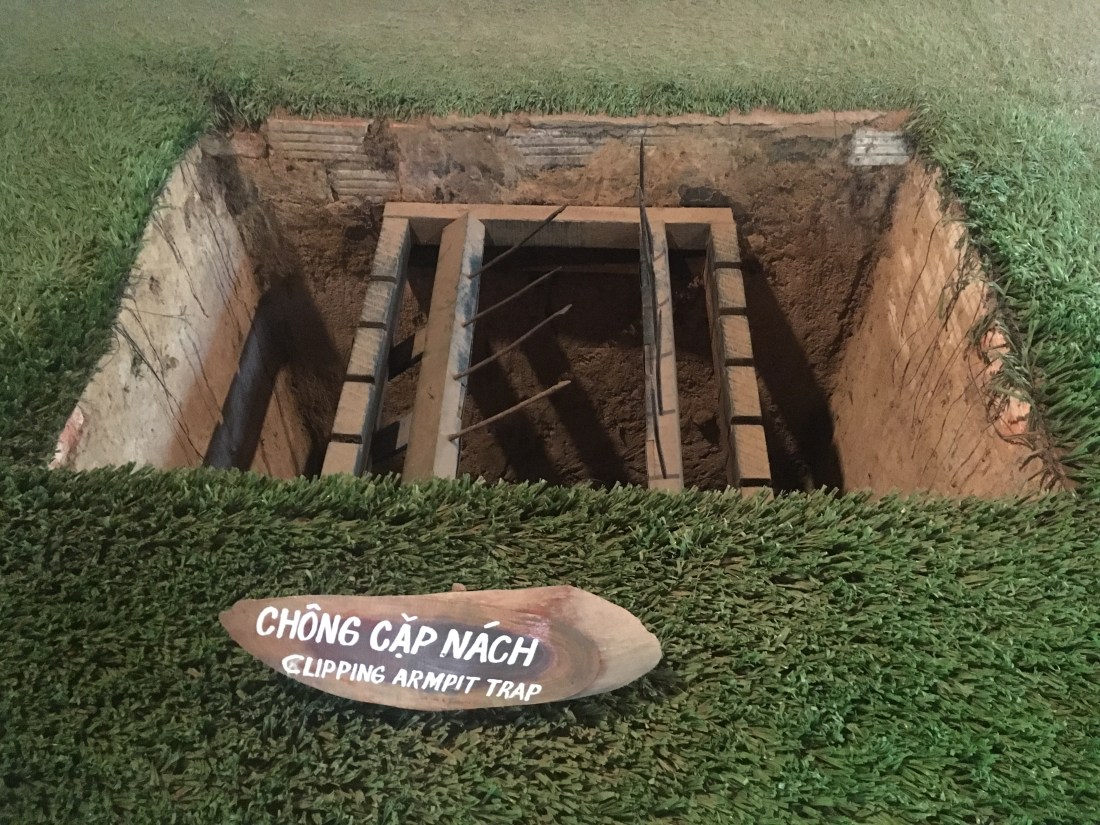

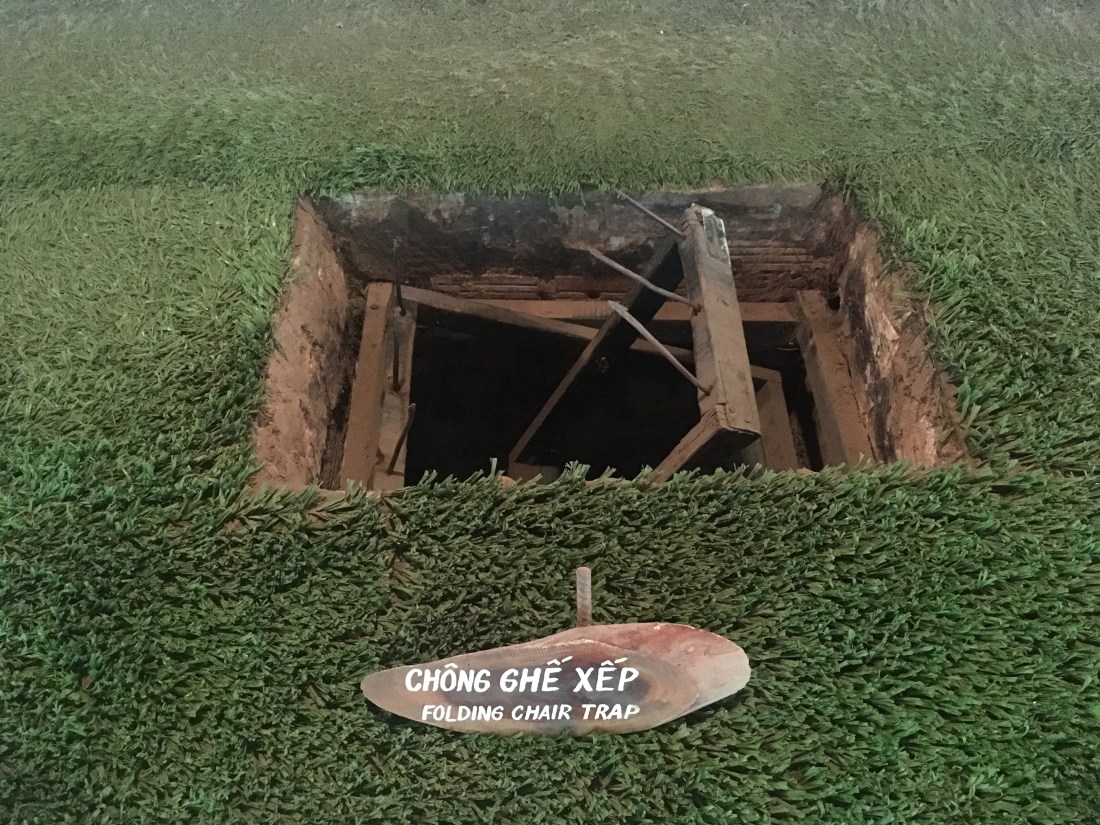


(the traps were often used to put other soldiers in an ambush while they tried to help the wounded man :bloke) One of the most interesting things about this place, was that at no point was any of the information glorified. It was what it was, war. Our guide told of groups of American soldiers he had shown around the site and that educating everyone, young Vietnamese included, goes a long way to rebuilding bridges and building better relations with other countries for the avoidance of future conflict.
Once again, away from the horror of the Cu Chi Tunnels, to the modern day Vietnam, we were delivered back to our hotel in Ho Chi Minh (still known as Saigon if you are from the south :bloke), and encouraged to enjoy a walk round the city and see for ourselves how the people have rebuilt their lives and look toward the future (as our guide said on several occasions).
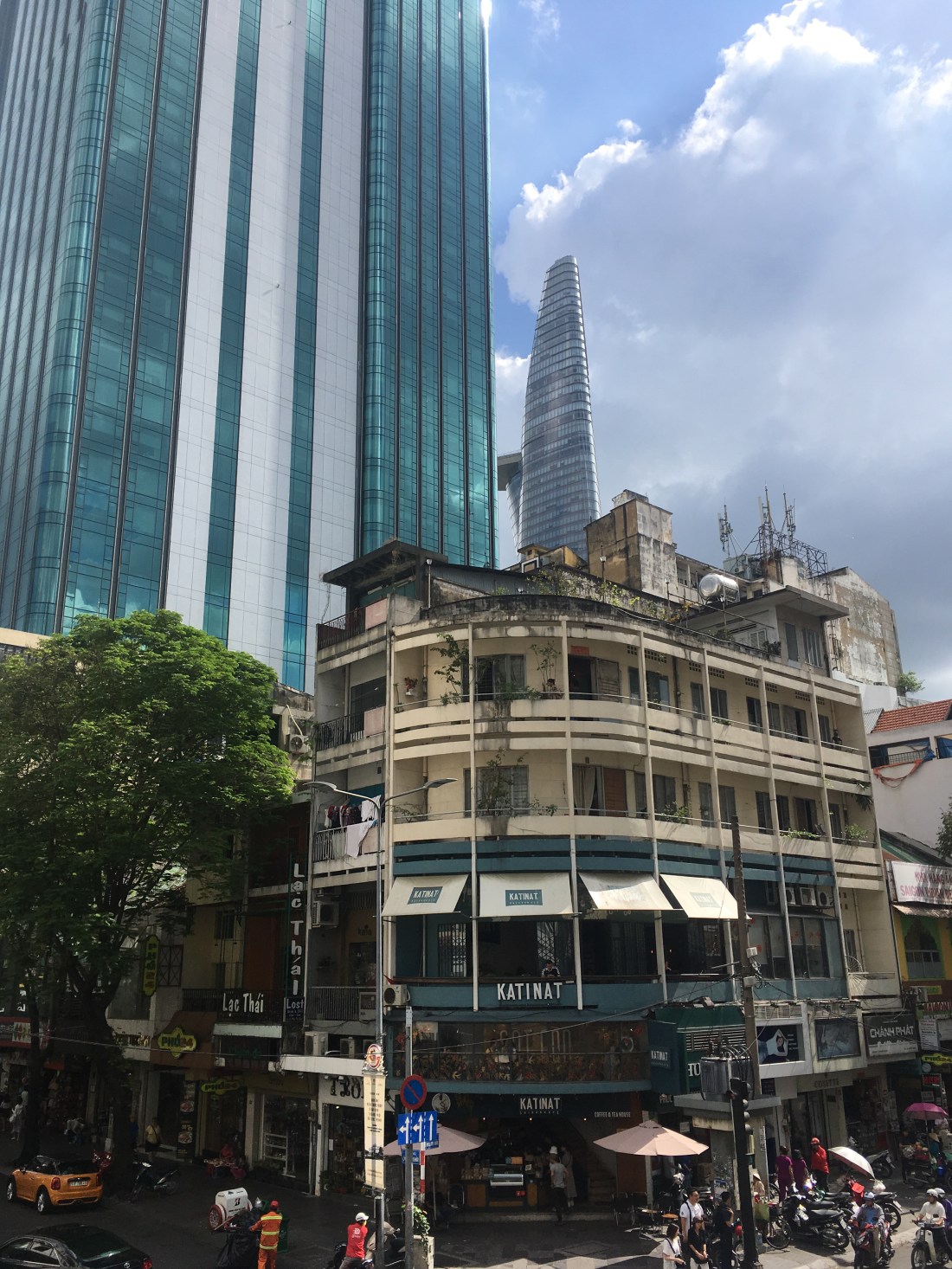
And what a city is it. Vast is the first word that comes to mind and far more modern looking than I was expecting. It’s the first place we’ve been since we got here that has proper pavements and yet they still ride their scooters on them lol. There are so many sky scrapers it’s unbelievable and that is definitely what makes it feel so modern.
The group decided to take our guides advice, and go to the second tallest building, the Bitexco Financial Tower, up to the Eon Heli Bar on the 52nd floor, by the heli-pad, and watch the sunset and enjoy the 360 deg view of the city, whilst drinking a cocktail (several cocktails :bloke). The views really were amazing, especially during and after sunset. In the distance you can see the tallest building, standing at 86 floors high.
 The view from our hotel balcony, you can see the heli-pad next to the cocktail bar on the sky scraper.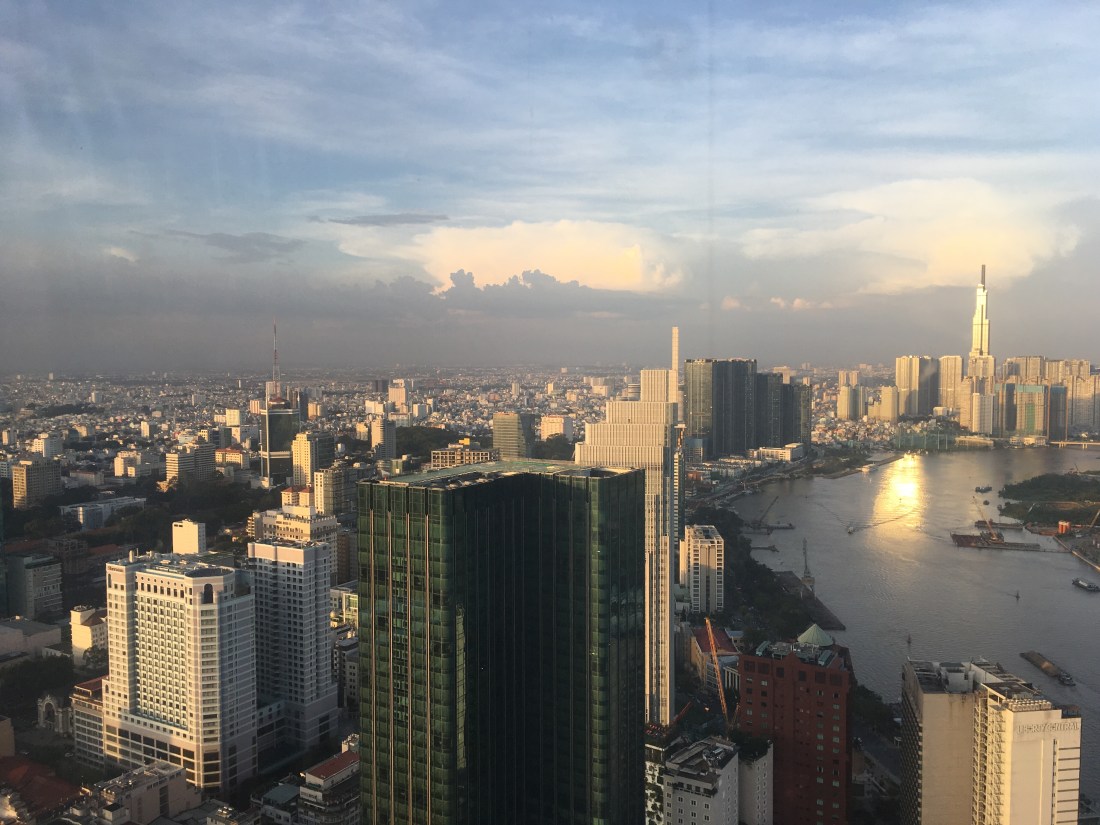

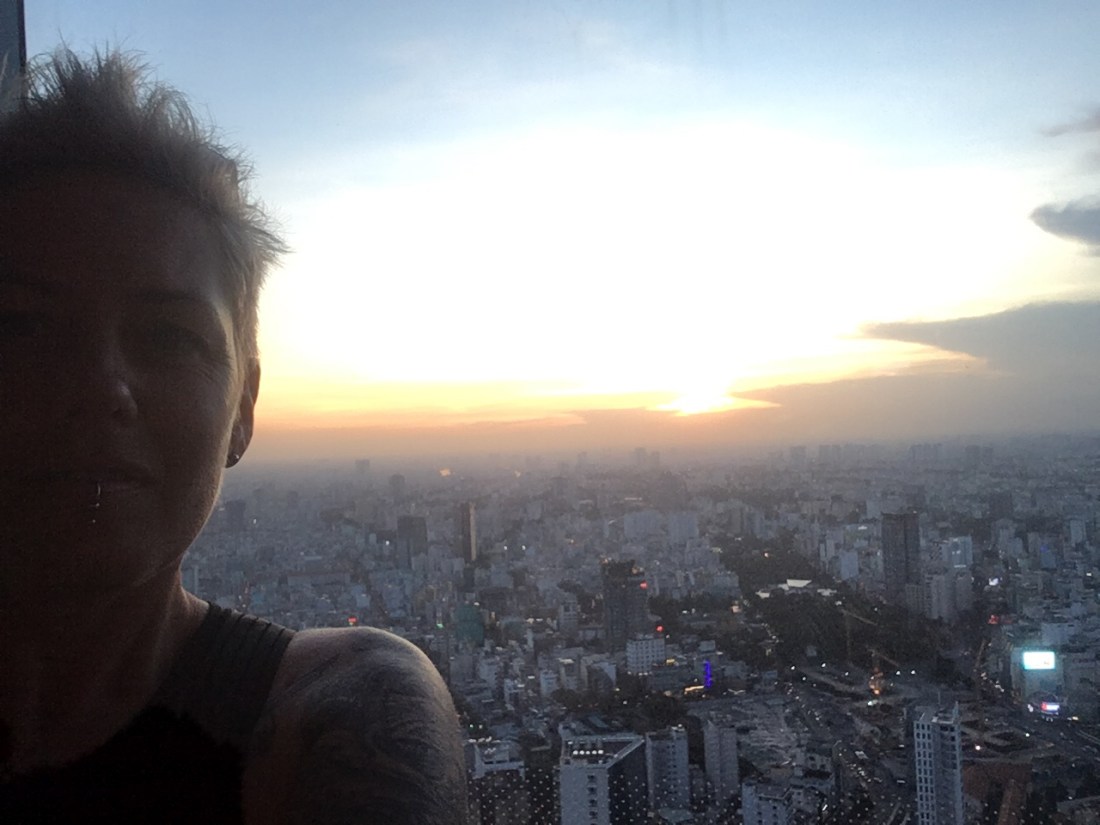
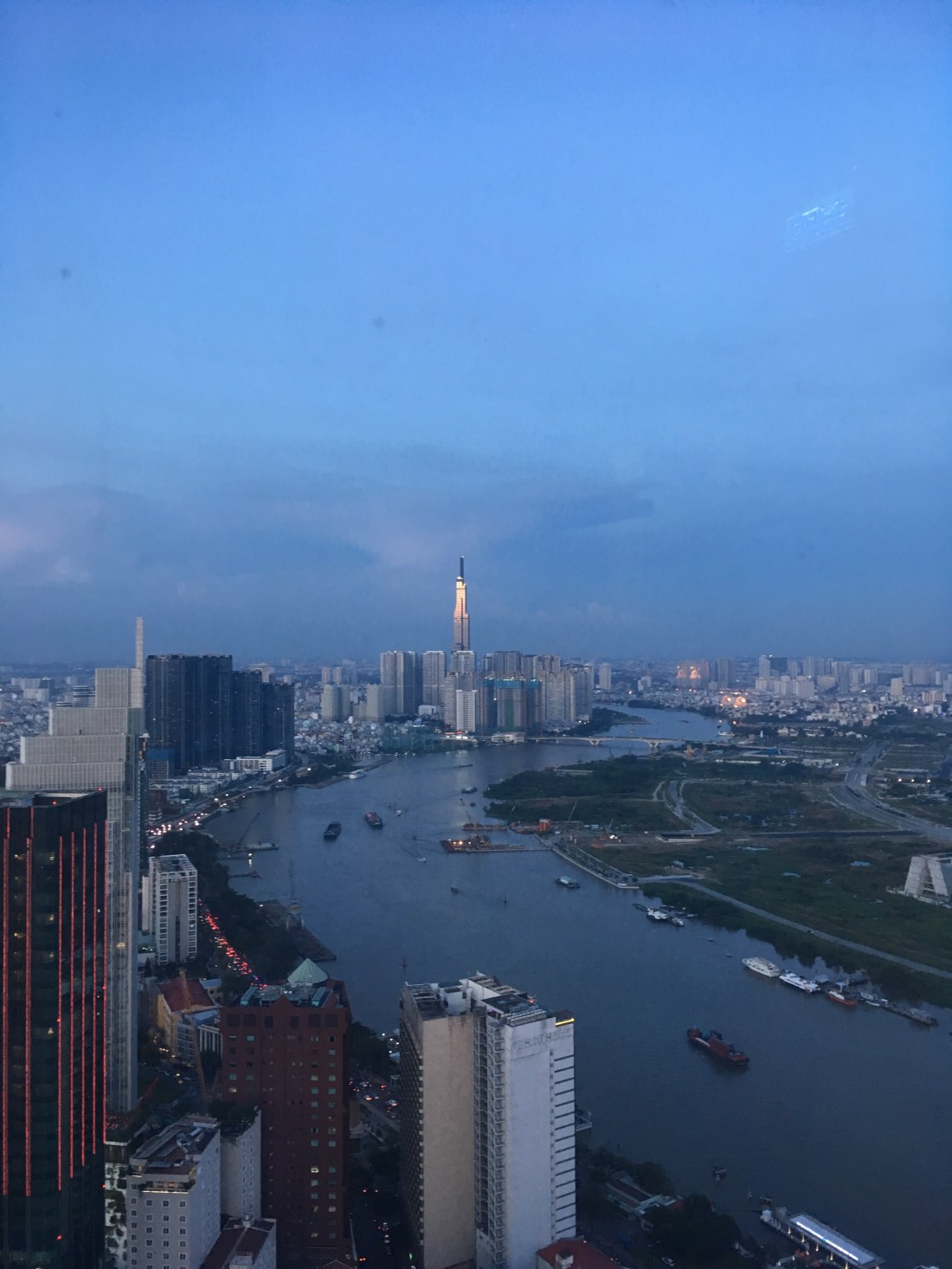 (check out the last rays reflecting off the tower. :bloke)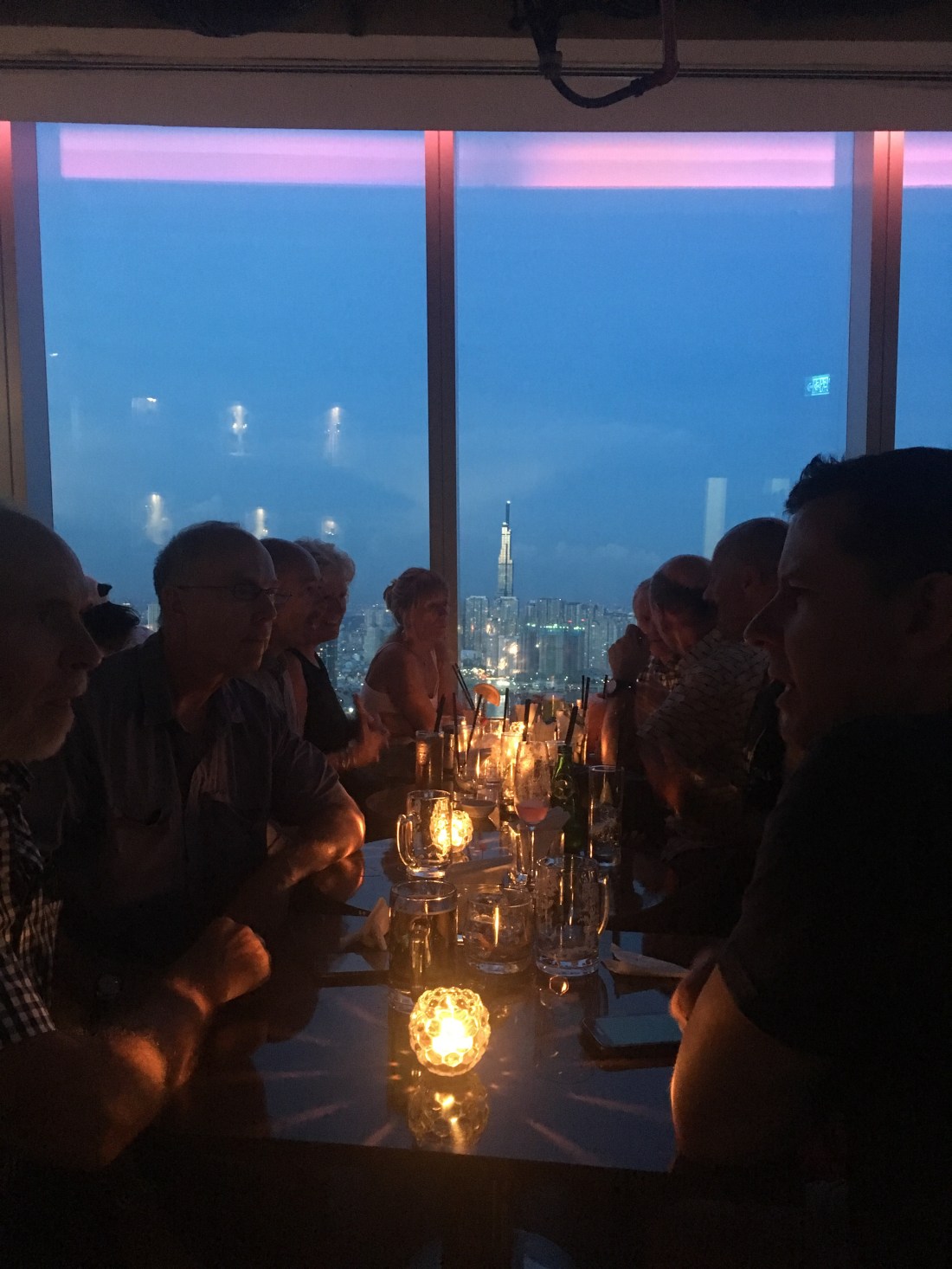
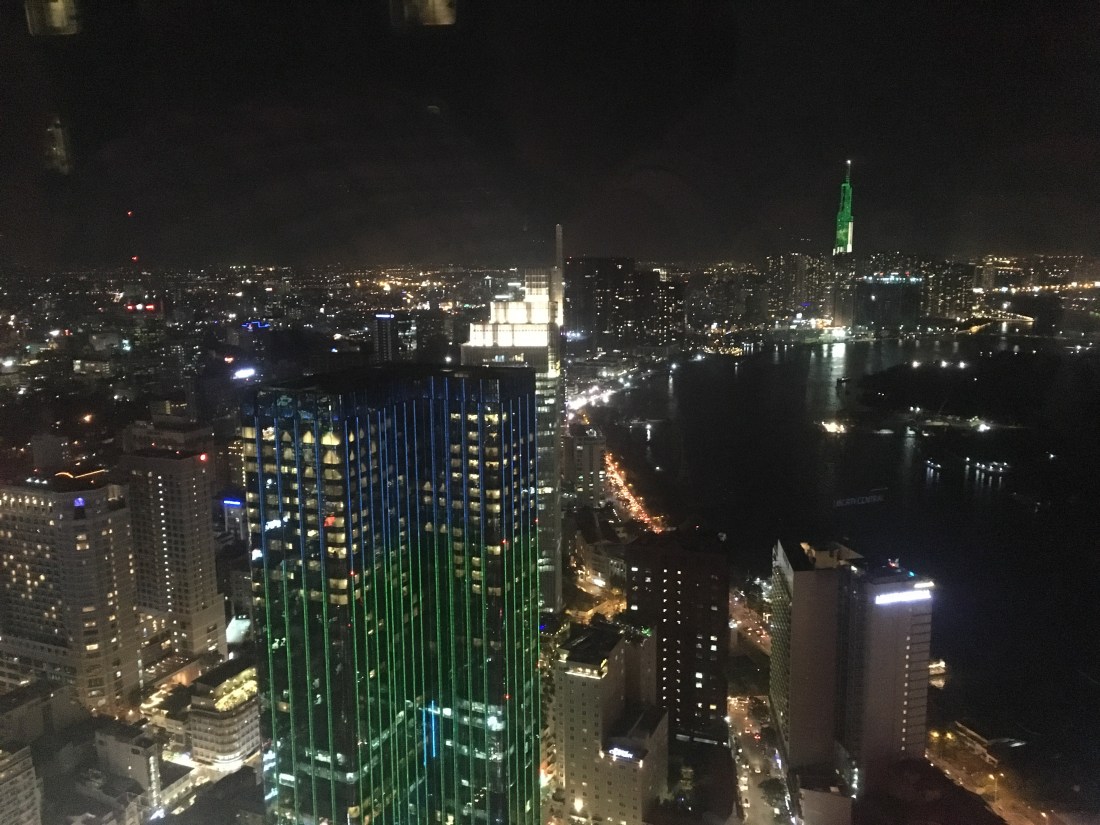
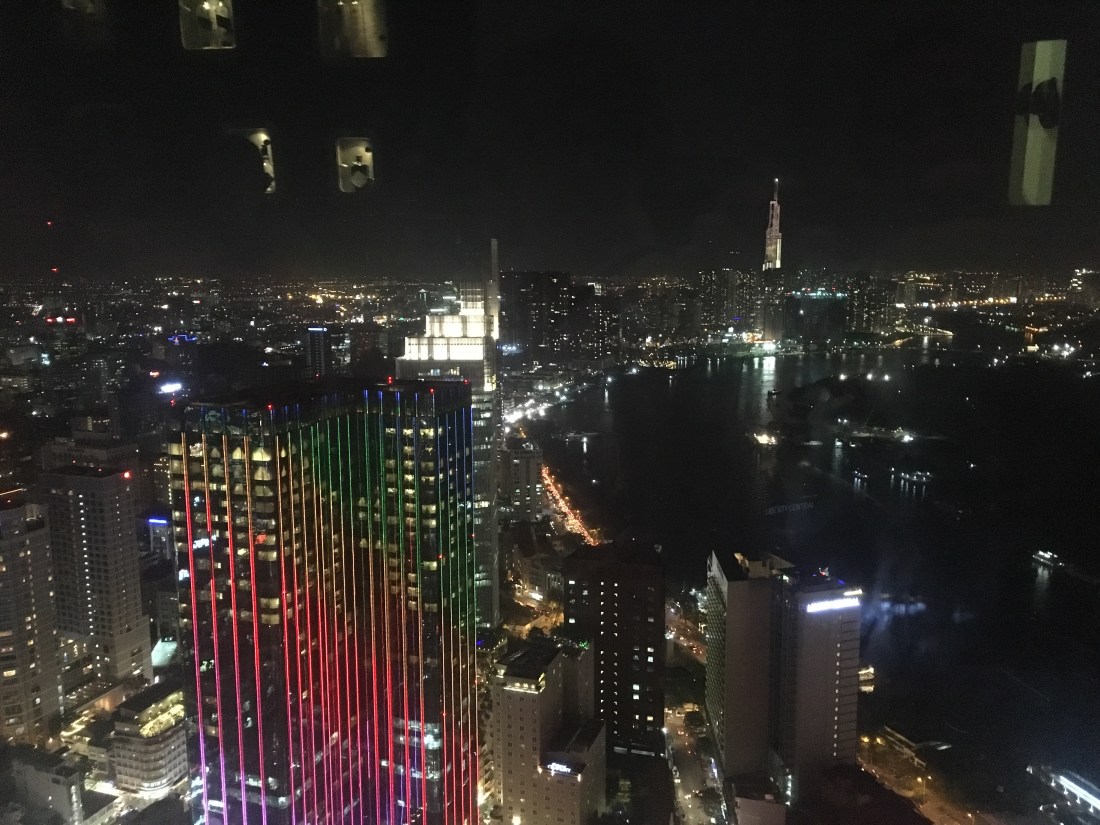 A street scene for you from a Friday evening in Ho Chi Minh city. Note the red light but the scooters still riding through it.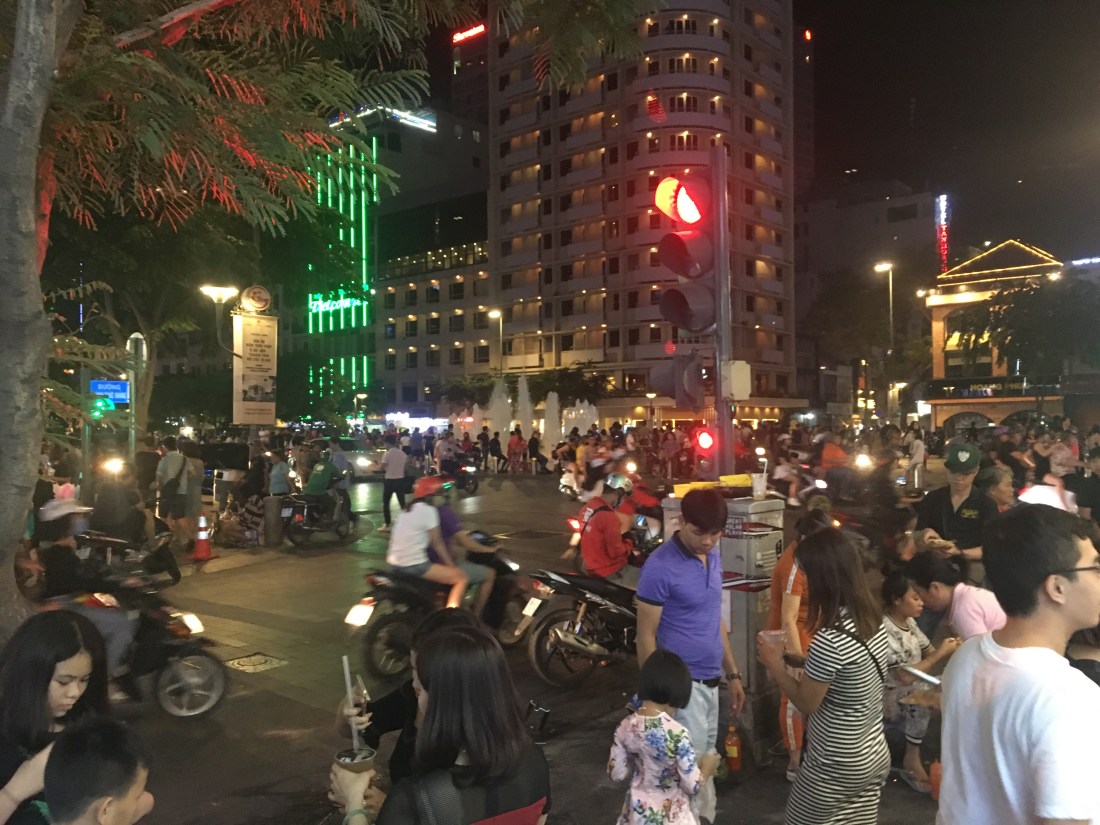
Most of the buildings are so narrow, it makes them look like little boxes piled on top of or next to one another.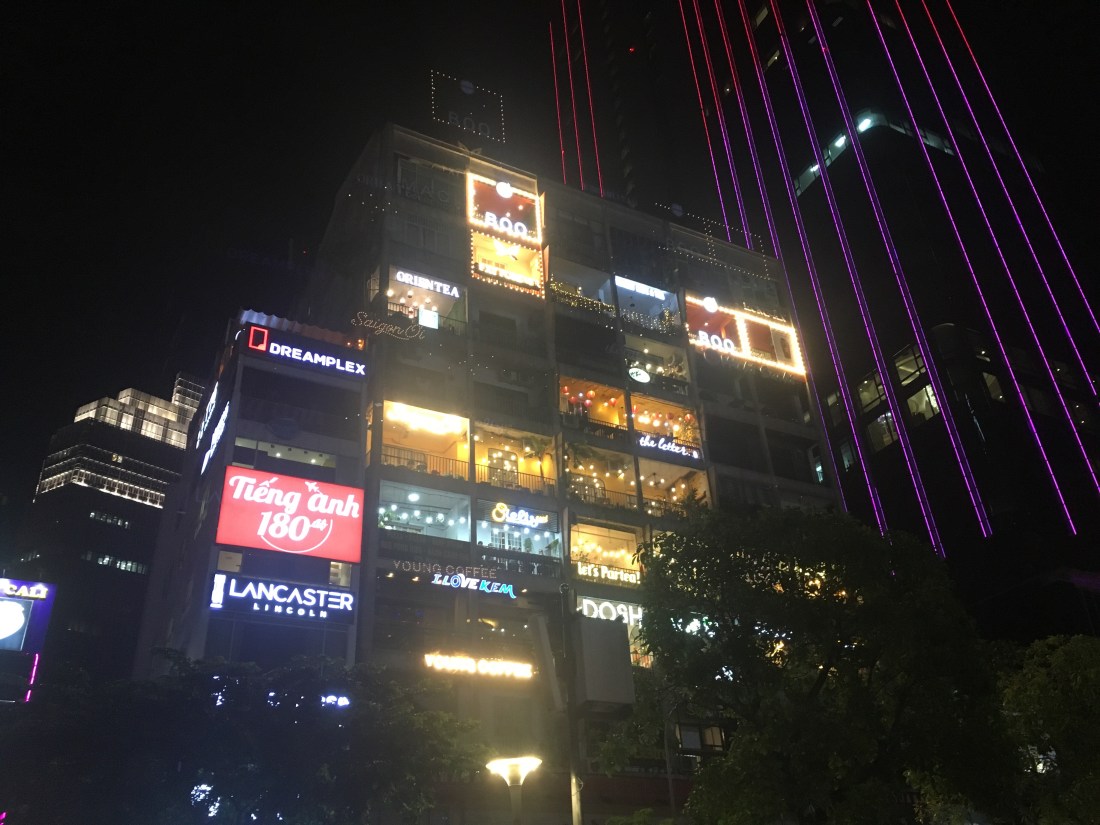
All in all, it was a really great last day with the group and a brilliant end to two weeks all together as a team. It will seem very odd moving on without them.
 Adventures of a middle aged mountain biker