She’s put me in the driving seat to cogitate over the last 6 days of racing and what it meant to me.
Let’s start with what did I actually do: the Trans NZ Enduro is a 6-day mountain bike enduro race. That means we ride our mountain bikes up the hill and then are timed on the race down the hill, multiple times a day for 6 days. A racer has to be fit enough to get up the hills in a reasonable time and competent enough to race down again on some very dicey terrain. To give you some more perspective, that is climbing and racing down 1 and a half Snowdons daily.
Also, the trails were graded somewhere between a 3 and 6 (out of 6).
i.e. you can expect “Giant climbs, steep descents, narrow track and numerous hazards including dangerous drop-offs, sharp corners and difficult obstacles. Expect walking and possibly bike carrying.”
Finally, the TransNZ is raced blind, that means no practice or track inspection is allowed – you just have to deal with whatever you get. If you’ve never raced a mountainbike I’ll try & give you an idea of the impact of that… Imagine you get home and you have to run to your own toilet – that’s pretty straight forwards? You know how to get there and what things you need to do and turns you have to make. Now imagine someone takes you to a Fun House at fairground, opens the front door and you desperately need the toilet, your guide says “The toilet is upstairs, but mind out for the boobytraps”. It’s kinda like that.
Needless to say, being tired and trying to ride “extremely steep dangerous drop-offs” at speed and as you find them, is hazardous to one’s health. It is far too easy in this type of race to get carried away with the “Espirito De Enduro” and find yourself suddenly going waaaay too fast and beyond your skills in a place with little forgiveness. While there are race medics on site, hospital levels of pain relief may be hours away. It’s nice to know you have a medic a few minutes away if you get a compound fracture, but you are gonna feel it big time until you are off the hill and in a helicopter (IF they can get one to you).
For this reason, for many competitors, the challenge is not to win, but simply to finish, safely.
This is the second “trans” type race I’ve entered. The first was Trans-Savoie in France in 2014. It was brutal, 110 entered, about 85 finished – there were two riders hospitalised on stage 1 day 1. One competitor had a finger amputated as it was mashed in a crash! At the end of every stage I used to tell myself “not dead yet” 😂. I am pleased to say the TransNZ event has evolved somewhat from that earlier race and while it is still wild, it picks its competitors and manages the risks far better – after all, nobody really wants to get hurt badly.
I do a few races every year, but because of the big trip we were on I didn’t train at all for this race. I don’t eat a “racers diet”, I drink beer and eat burgers. I am fairly fit, I hit the gym when I’m in the UK, I ride at least twice a week, but I am not likely to turn pro and pick up a sponsor anytime soon. I guess I’d describe myself as a fairly competent enthusiast – no more than that.
So how did I find it? IT WAS A BLAST!
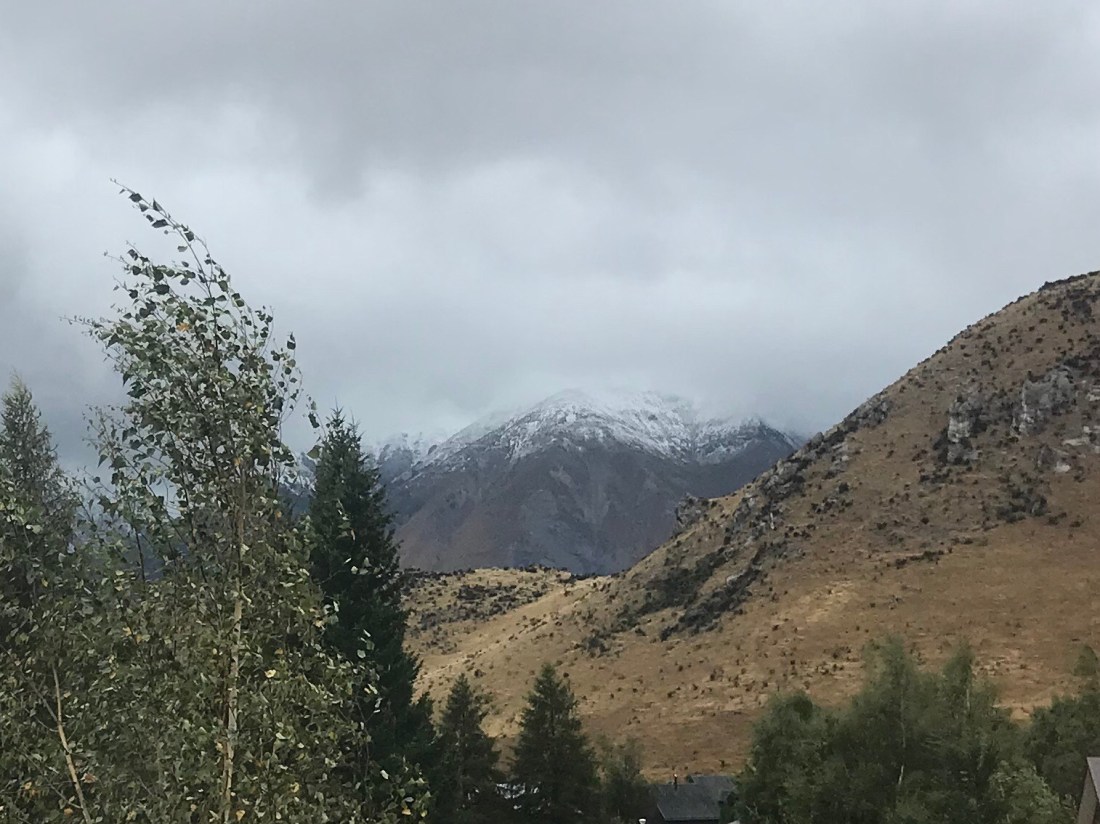
The first few days in Craigieburn had awful weather. The tail end of Cyclone Oma blew in at just the wrong time.
The rain and cold meant a shortened day 1 and revised day 2 – even so we had some very long, hard, fire road climbs with snow laying towards the top. This gave everyone an opportunity to stretch their legs and have chats– find out who was who and make a few friends. I learned lots about riding in other countries.
What I learned about other countries: many of the Canadians hadn’t ridden all winter because of the snow at home and this was their first ride in 4 months, they did not enjoy the ‘high stakes’ first stage. Some of the Europeans were recently landed in NZ and were terrifically jet-lagged, they responded well to the high level of alertness required on Day 1 (day 2 & 3 might have been more of struggle?). About 75% of the riders were from Australia, the Australians are not accustomed to riding in the wet or riding on roots – some had never even seen snow!! The Kiwis are a mixed bunch, depending where they are from they might not have ridden in the wet for years, some never see snow. The Chinese contingent were not accustomed to riding long descents or long climbs, or riding in the wet, or riding wet roots. TBH They were probably at the largest disadvantage…
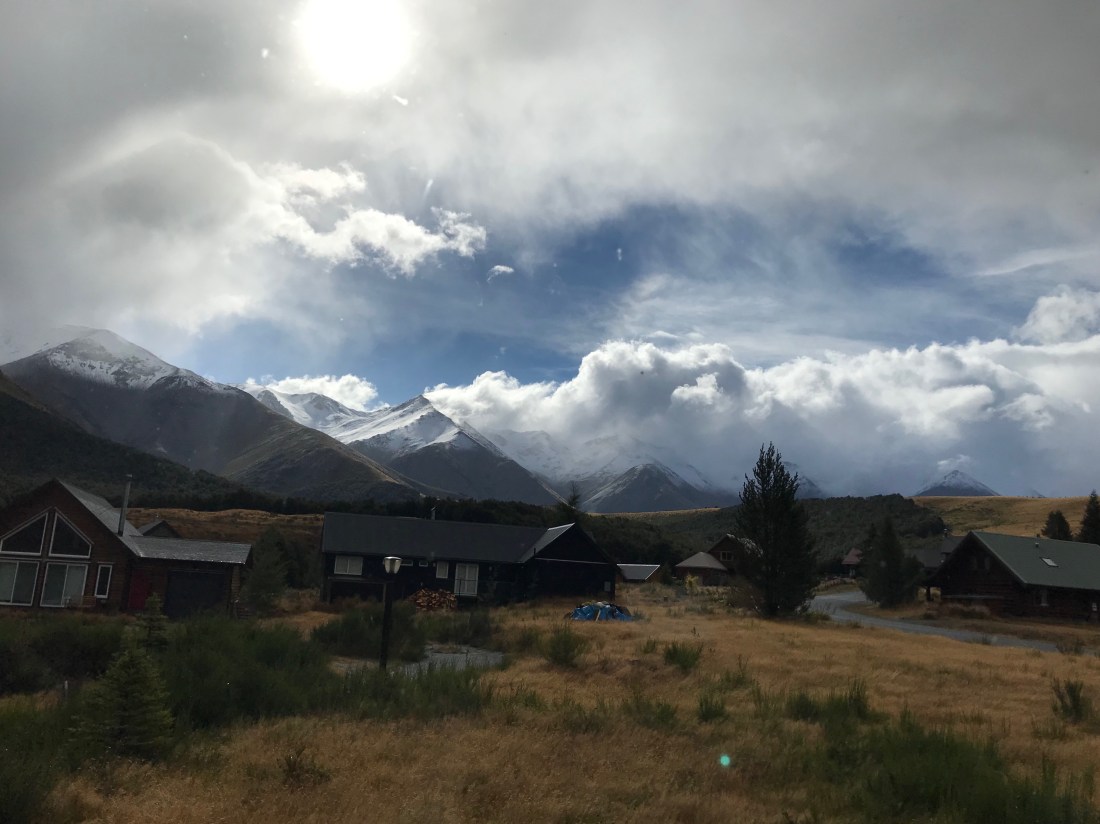
Most of us had not ridden near Craigieburn so it was largely a mystery, but we were briefed that the trails were rooty, muddy and very exposed in places. “Exposed” means that at least one side of the trail has a drop away – like riding along the top of a cliff. In fact, the first stage started as basically a race along the edge of a 60 meter cliff, some of the turns were too tight for me to ride around and I had to walk the bike along the 4-inch-wide lip, leaning on the inside rock face to ensure safe passage around the tight corners. It progressed into a wet muddy luge ride over slippery wet roots – just like riding in the Forest of Dean at home! Stage 2 was just like the last. Having gained a little confidence and reintroduced myself to riding in the wet I was weaving between the fallen Australians, doubling little gaps and sliding from berm to berm. I still made a few errors, in the opening sprint off the start line I overestimated the amount of grip on roots and found myself bouncing off trees with no feet on the pedals LOL. I managed to not fall off and had a sharp word with myself about self-preservation. However, I still had a spill later in the day due to hitting a wet plastic pipe that crossed the trail (these are especially slippery). I can be sure it was a pipe as the front tyre slipped badly, then back end of the bike overtook the front end. But of course, the confirmation came when I saw the pipe whilst I was sliding down the trail on my belly..
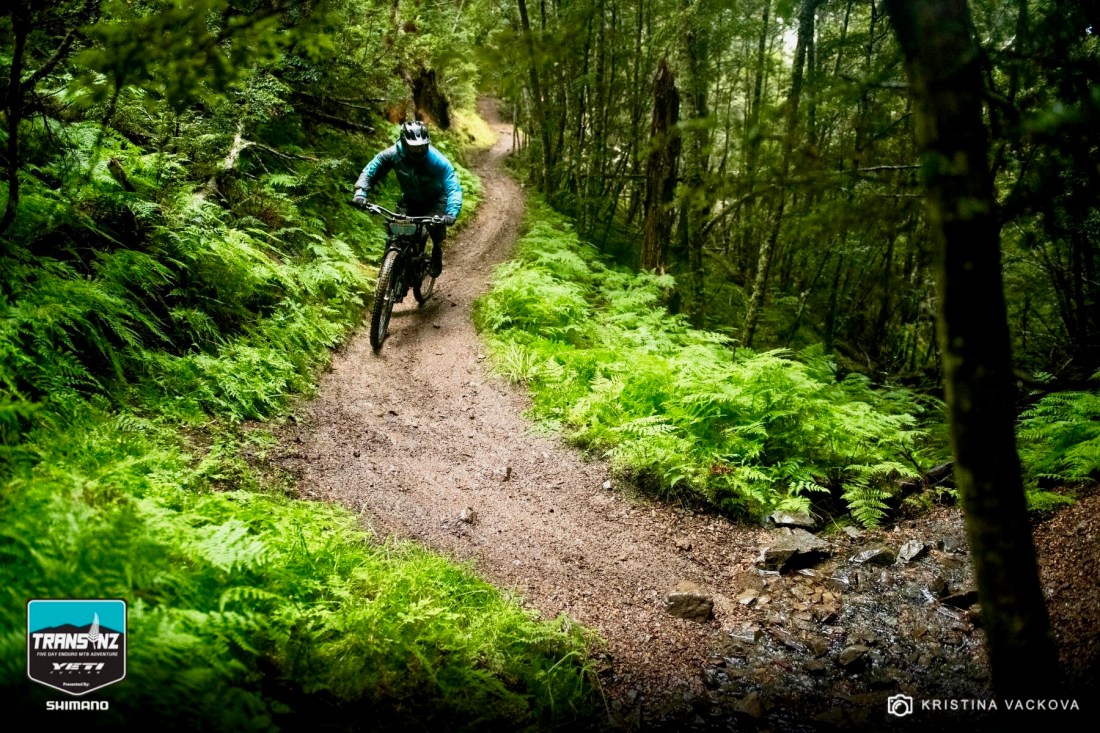
Wet and very cold
Day 2 was more of the same. Bloody brilliant! The Aussies had started to get to grips with the situation (pun intended) and everyone was enjoying the challenge and having a great time. It was still wet, but there was less concern about the cold as the day was planned to be short and only one stage was above the frost line. We finished racing at 1ish, got hot showers at a Ski Lodge, grabbed lunch and boarded mini-buses bound for Queenstown.
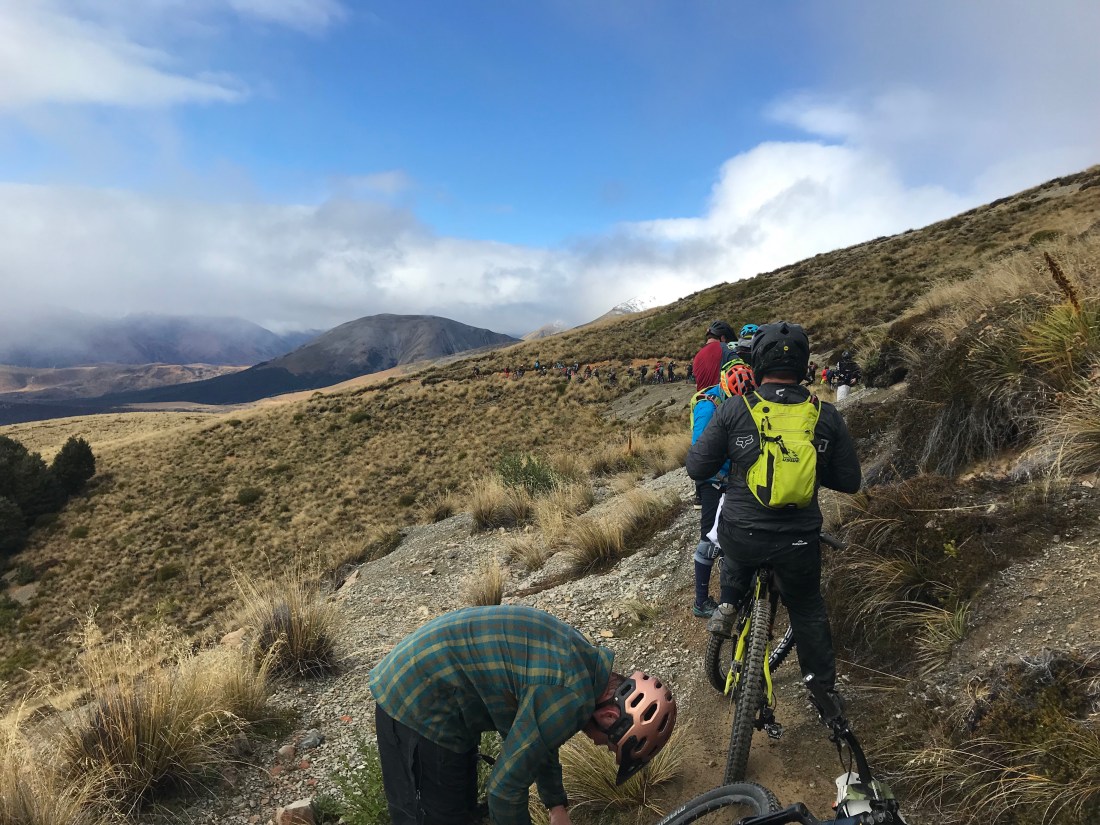
The riders congregate at the start of stage 2 day 2
Day 3 was all about riding in the open. We got dropped at the Coronet Peak ski field car park. This meant a 350m climb to the tip of Coronet Peak before hitting two stages to take us a total of 1000 vertical meters to the bottom of Skippers Canyon in about 9km (or 22 minutes of racing). Wooooohooooo, what a hoot. Berms, drops, jumps, flow: this trail had it all! Then 500m of climbing out of the canyon, a short stage 3 then a vehicle uplift plus 250m climb to stage 4. Stage 4 is where everything suddenly got very serious. Stage 4 is a grade 6 (Double Black) descending 500m over the 1700m course. So to say it is steep is an understatement. Most folks wouldn’t be able to walk down it without a rope – I’m not kidding it was STEEP. TBH, I couldn’t have walked it – vertigo would have crippled me, but when I ride I can only think of the trail & what I need to do, conscious thought goes out the window I didn’t really race it – I just about rode it, But I did ride it out! What a relief. I didn’t die. Finally, just a short downhill transition to the finish line for a few recovery beers and some isotonic recovery cider.
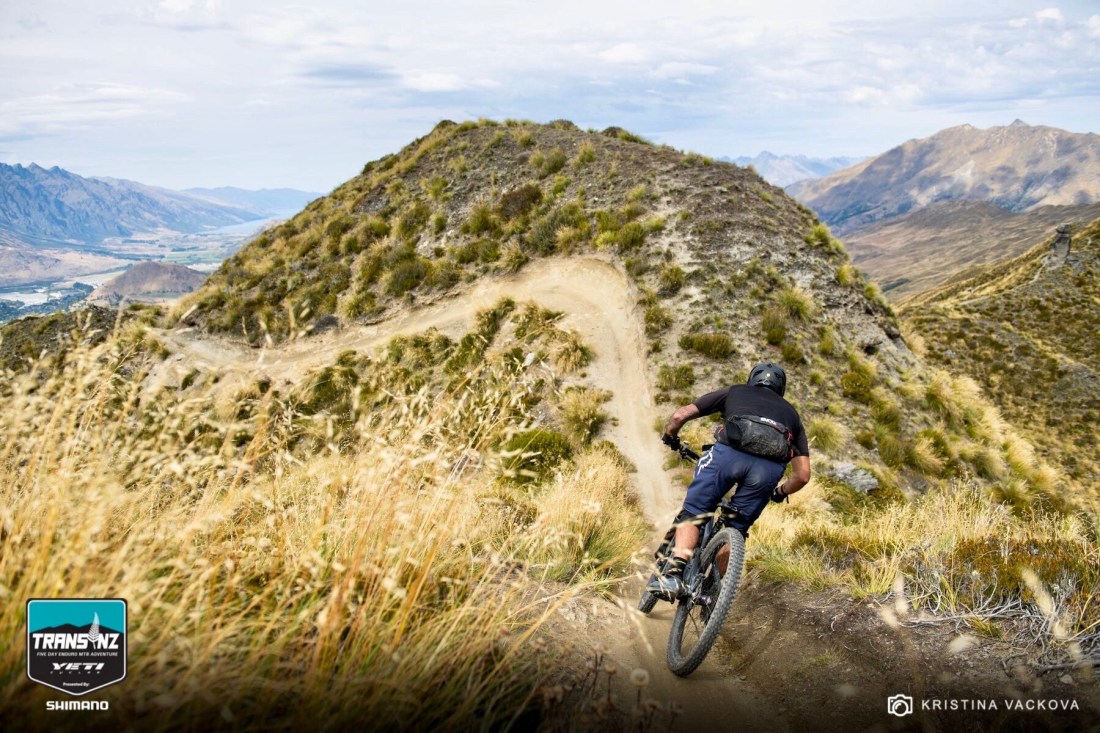
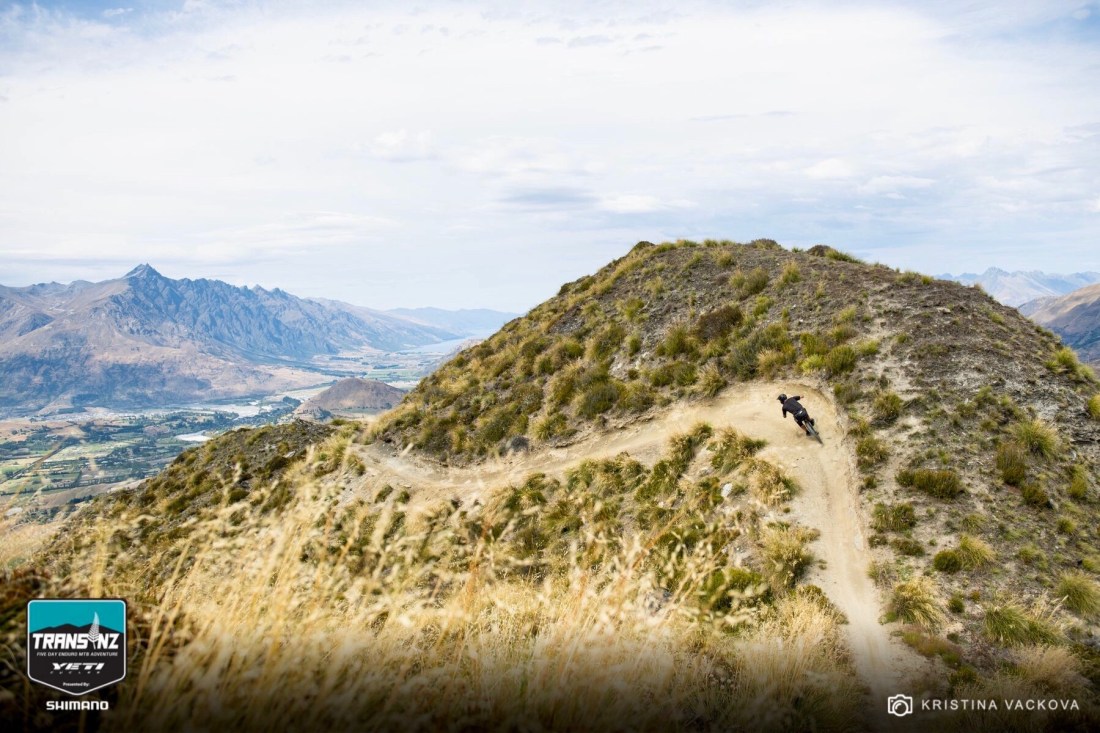
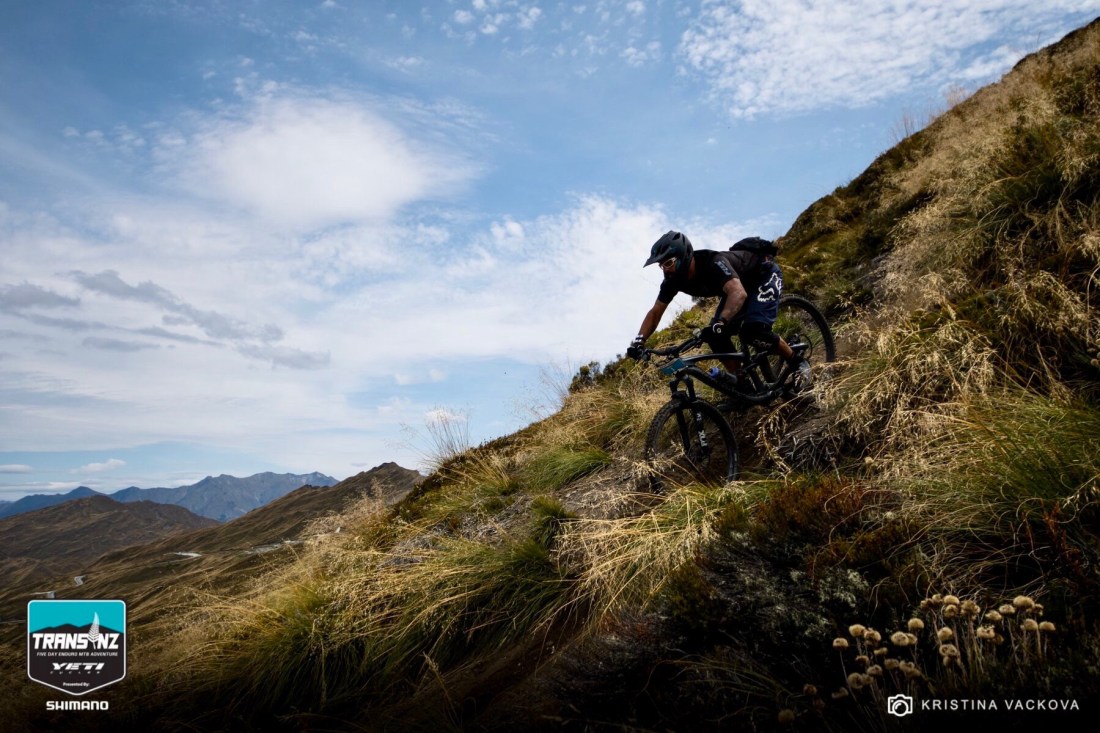
Above is stage 2, called Rude Rock. Below is the start of Slip Saddle aka Stage 4
Day 4: Cardrona bike park. Cardrona is another winter ski field. It’s high, 2200m. The weather forecast said “Precipitation, freezing level at 1200m, 40kmh wind, low -6deg” That’s a pretty scary forecast – two of the stages are uplifted by cable car, which means you start and ride up in the rain (get wet), ride a downhill stage in -6 & 40kmh wind (so you’d get really cold) then sit in chairlift for 10minutes (and get even colder), then try to race a seriously technical difficult stage before repeating the exercise. I didn’t have enough clothes in the UK to cope with that, let alone having enough clothes with me in NZ. I was seriously worried & I wasn’t alone, the Aussies were in a similar boat – they are used to 20-40degC, even the home crowd, Canadians and marshals were looking a bit cagey. NB: the Marshalls are the unsung heros here – most of them are SERIOUSLY talented cycle professionals, ironically, much better riders than most of the racers…
However, I’m pleased to say (sorry to say) the bike park called it – they decided it was too windy to use the lifts. I was saved!! I have honestly never been so pleased to be told I can’t go and ride. We headed back to Queenstown and decanted to bars to spend the day resting and rehydrating, like the serious athletes we are.
Day 5 Alexandra – for my money, the jewel in the crown. This days racing is held on private land and not accessible to Joe Public. The trails are built and marked with pink paint. The trails are narrow and you must be pin point accurate, if your front wheel is “not on the pink dots you are gonna have a bad time”. This was THE most of fun ever. As long as I trusted the pink dots I hit blind crests at race speed and ran 6 inch wide rock runouts. Such exhilaration!! Death or serious injury was inches away at any given moment, the slightest deviation from plan lined me up with a 2 meter plus vertical drop onto bare rock (poor Sarah, leading the womens category ended up with a nasty dislocated elbow on Stage 2, needing hospital treatment, after falling and getting her arm stuck between two rocks, ending her hopes of taking the win : chief blogger) Such a gas!!!! I’m not gonna lie, it didn’t work out perfectly, the lack of training started to tell towards the end of the day & I had a couple of spills on the last stage due to tiredness.
You can see the video: Here fortunately, I generally crash well – no serious damage for me that day. (I’m still not dead!)
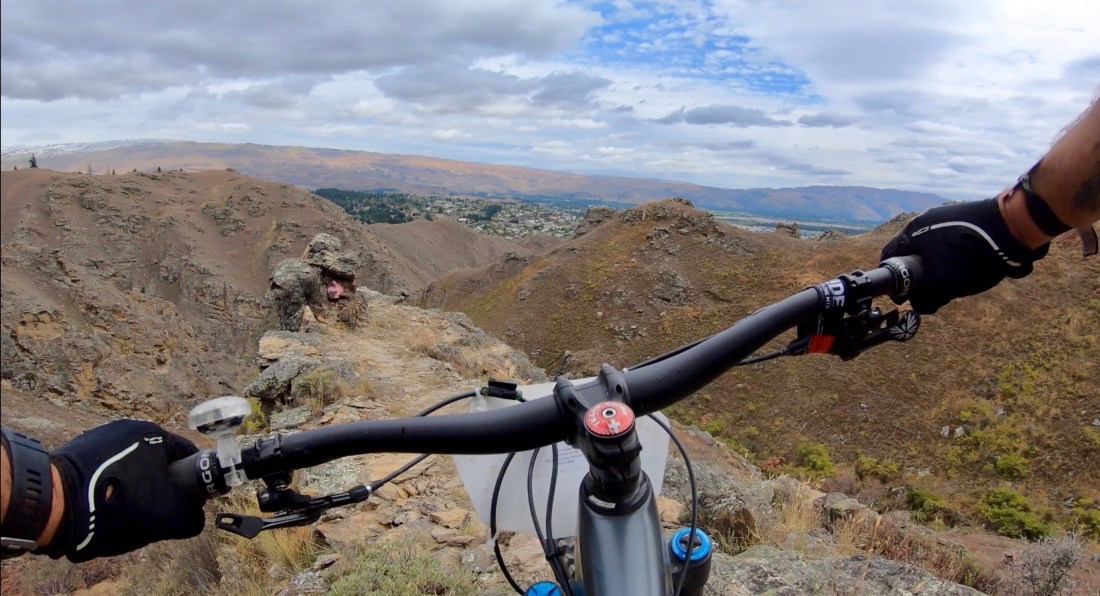
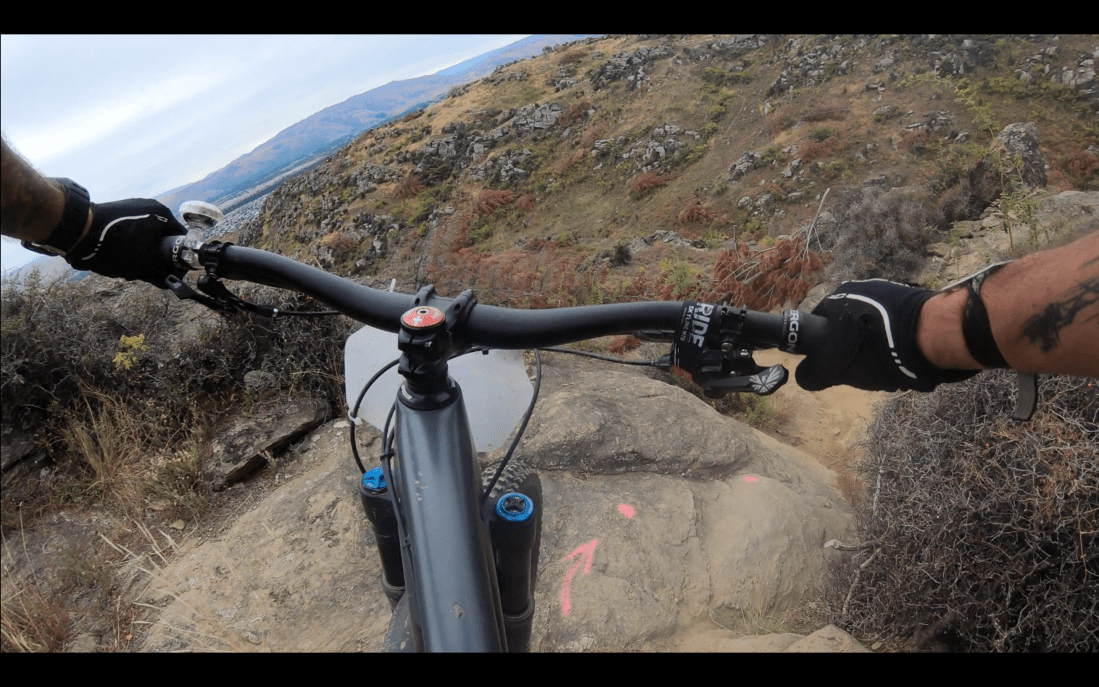
Follow the pink dots!
Day 6 Queenstown.
From a riding point of view, I was feeling OK. I’ve ridden here before, I felt pretty happy with the race so far. I haven’t talked much about my position in the racing mainly because I was never going to win – I’m aware of my limitations, I started racing bikes late in life. I’m in my late 40’s. I don’t train properly. I have a desk job. I drink beer. But I was sitting at the halfway point in the pack, I was quietly pleased with 19th out of 38 riders still in the race (in my category – over 40’s).
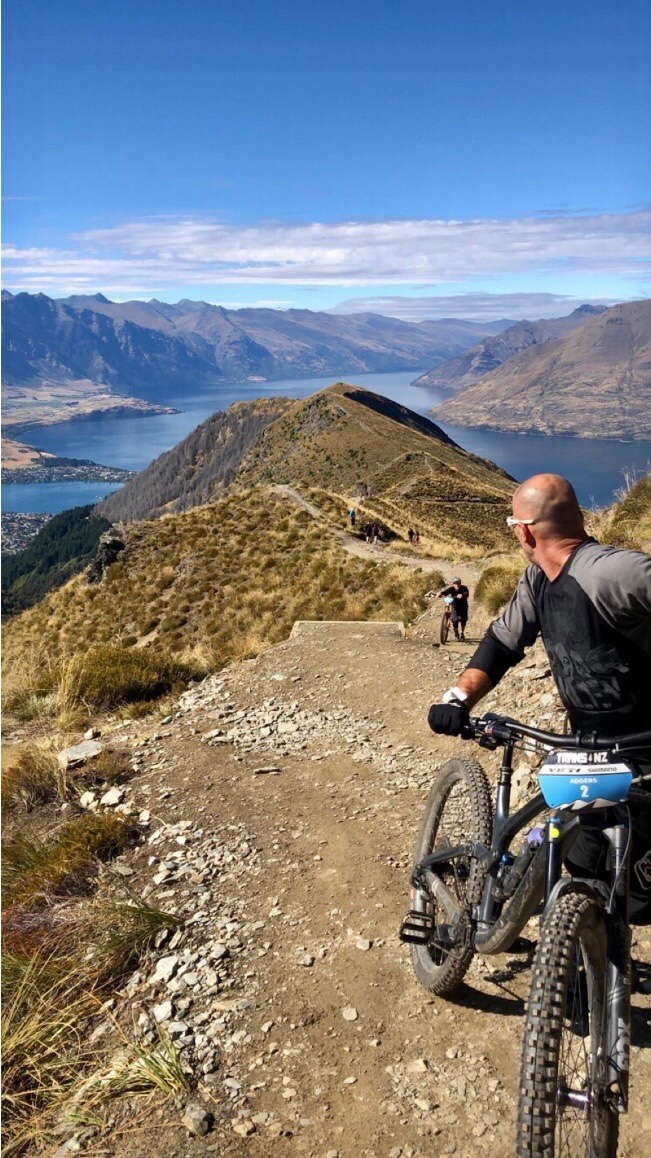
Push up the footpath, then race down the ridge line. Queenstown is 1000m below
As always, pride comes before a fall… or in my case two flat tyres on the last stage.
First two stages were just bloody good fun, amazing views, rip roaring rock ridges, dry rooty forest, lightning fast singletrack, dusty berms, then boom – the rear tyre took a hit and split. I had no real idea how long the stage was, only that I was high on the hill and it was likely to be a long one. I got all my weight on the front wheel and tried to keep rolling and hope the tyre stayed on the rim, then “psssssst” the front punctured too. OMG – Total disaster! You can ride a bike (just) with a flat rear, but a flat front tyre just won’t turn corners. Now I was off the bike and running with it. And it felt like the longest stage EVER!! As it turns out it was a long stage LOL – It should have been a 12 minute, but it took me 20 minutes. Initially, I was gutted. I dropped from 18th to 23rd place in one stage. Then I was more annoyed, I didn’t get to ride half of the stage I’d spent half the bloody morning riding up the hill to get to the start of. Later I became more pragmatic after all I couldn’t do anything to change what happened. I’d done the technical things right, we can argue about minutia if you like, but sometimes cyclists just get flat tyres.
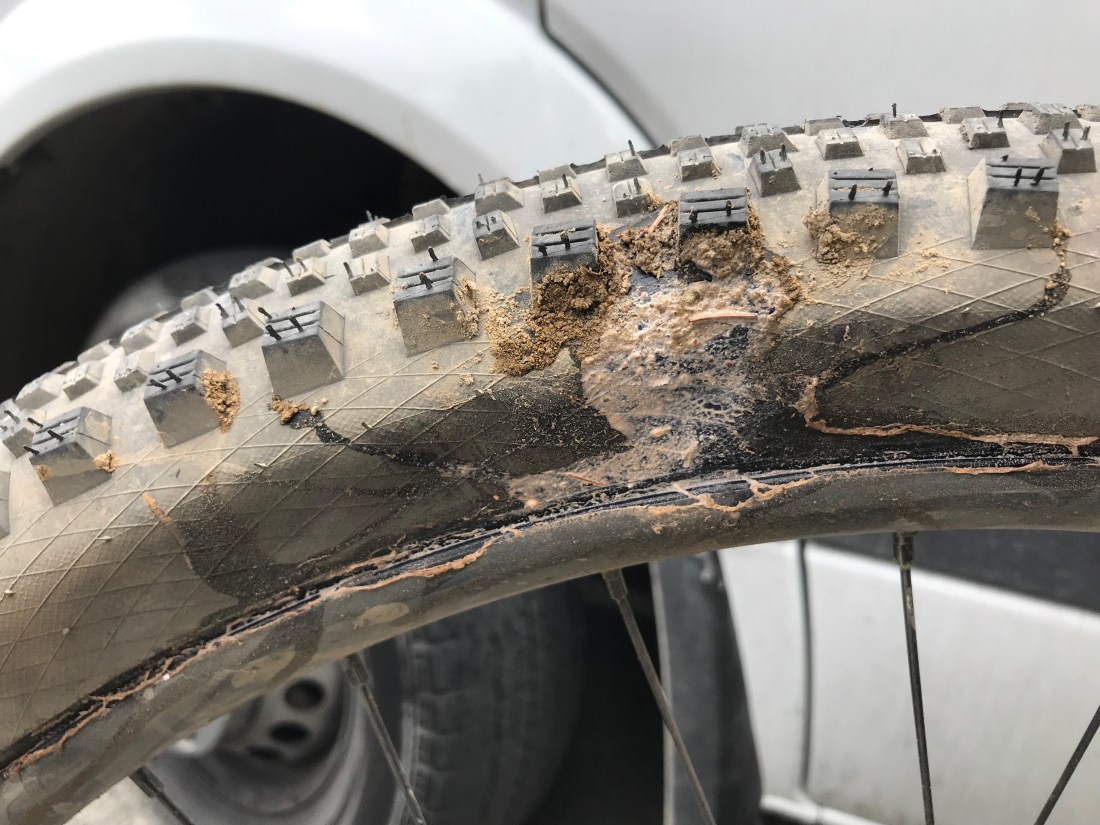
Here’s one I prepared earlier…
Ultimately, I was just so happy with my week, I didn’t die or get a serious injury. I finished just below the halfway mark. I don’t take it seriously enough to lose any sleep about the choices I made on the approach to the race or during it. You have to be realistic, take what you can from it and enjoy it for what it is (basically a bunch of “gentleman racers” playing at international racing – with a few actual fast folks in the mix too). I’d actually had an absolute blast of a week, met some awesome ladies and blokes with amazing backgrounds and ridden some trails I wouldn’t have gone near otherwise. It really doesn’t matter how fast or slow we all were – no one was making a living from racing, we’d all paid to be there. We shared the same ambition, to get out and ride our bikes in cool places. Yeah some were faster, but there is always someone faster. Similarly, there is always someone slower too. The important thing, to my mind, is that with the cost of the entry ticket I bought some cool stories and amazing memories and you can’t get those in shops.
What other things do you want to know? Ask – in the comments below.
 Adventures of a middle aged mountain biker