#newzealand #travel #adventure
Apologies folks, this is a bit of a longer post than normal. I’ll try to get back to writing them more often and therefore keeping them a tad shorter for you.
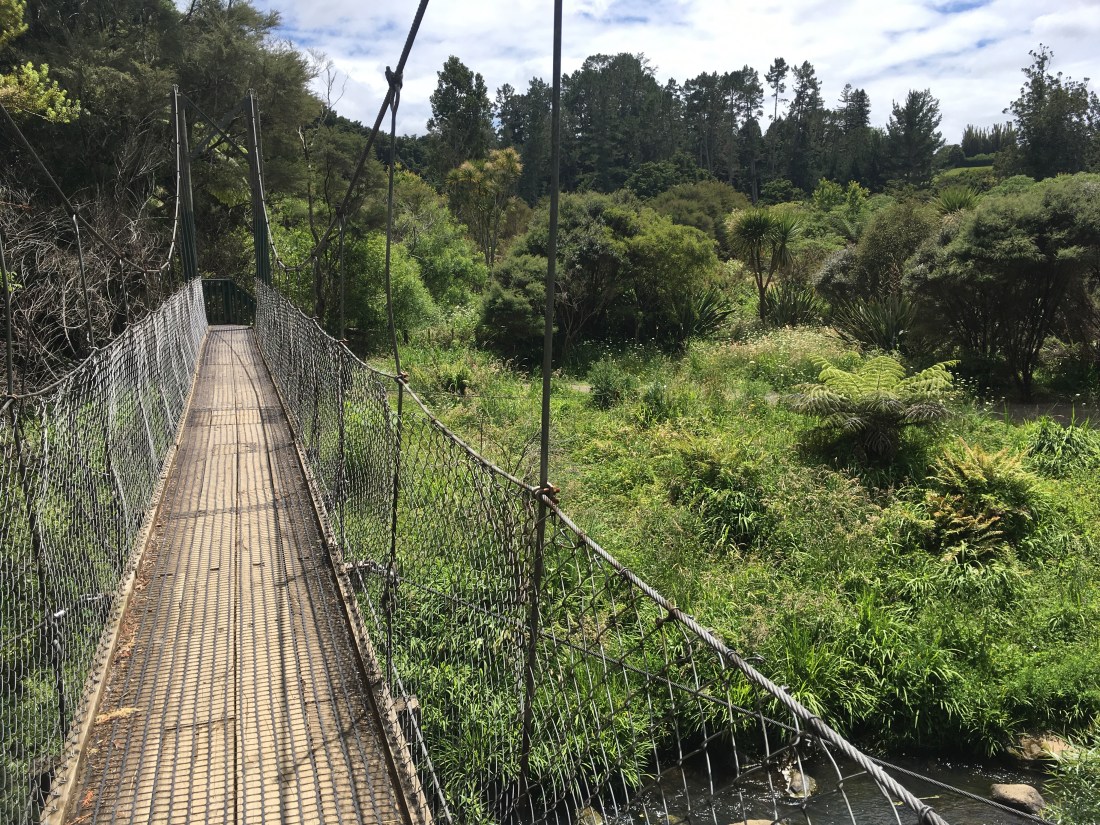
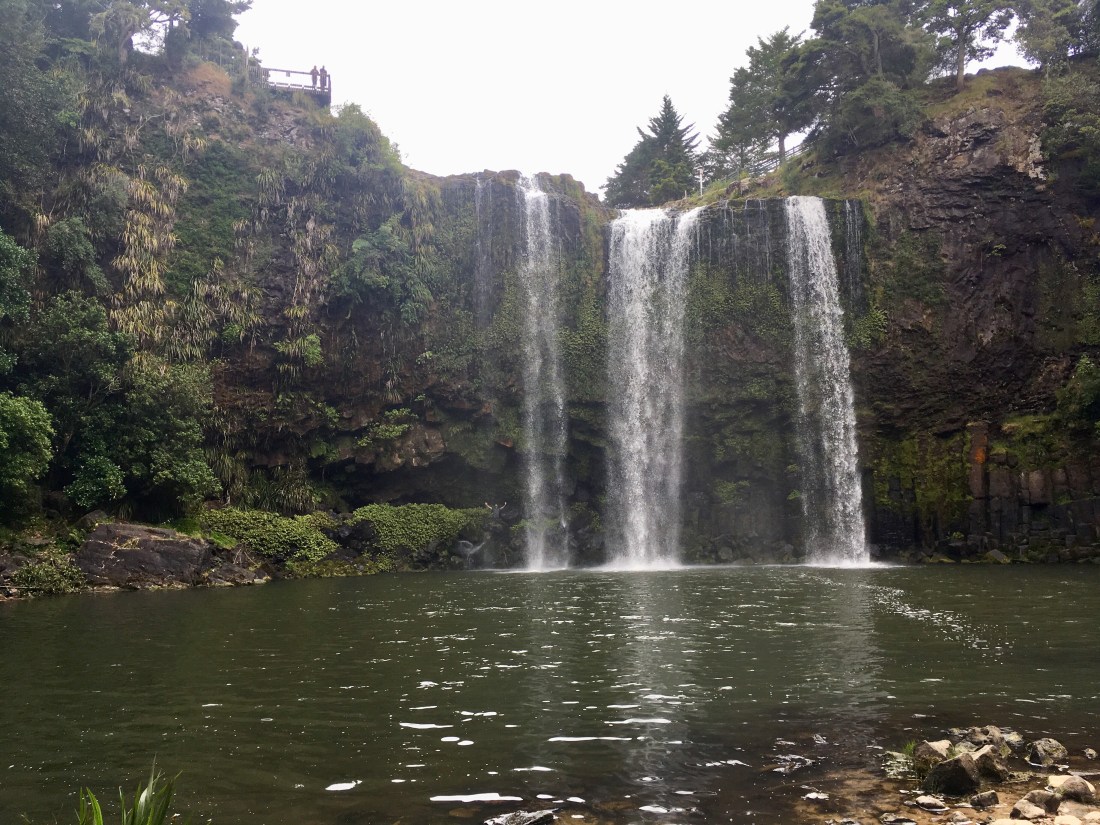
Monday 19th November……Feeling buoyant after our #brownsign adventure from yesterday, we headed off to the Whangerei Falls, as recommended by the lady in the campsite office. Having no real idea of how long this would take, and only having the campsite map to follow (not to scale), we had no idea what we were really in for. Once again, the Waterfalls did not disappoint. They were amazing, and the walk to them through the A H Reed Kauri Park and canopy walk was gorgeous. It took us through fantastic ferns, alongside a river, and meadow lands too. Bloke managed to get up close and behind the waterfall, clambering over slippery rocks, too much for me to trust my dodgy knee on. If you look very closely in the picture, you can see him behind the falls.


(I would just like to make it clear, I am not wearing a skirt :bloke) 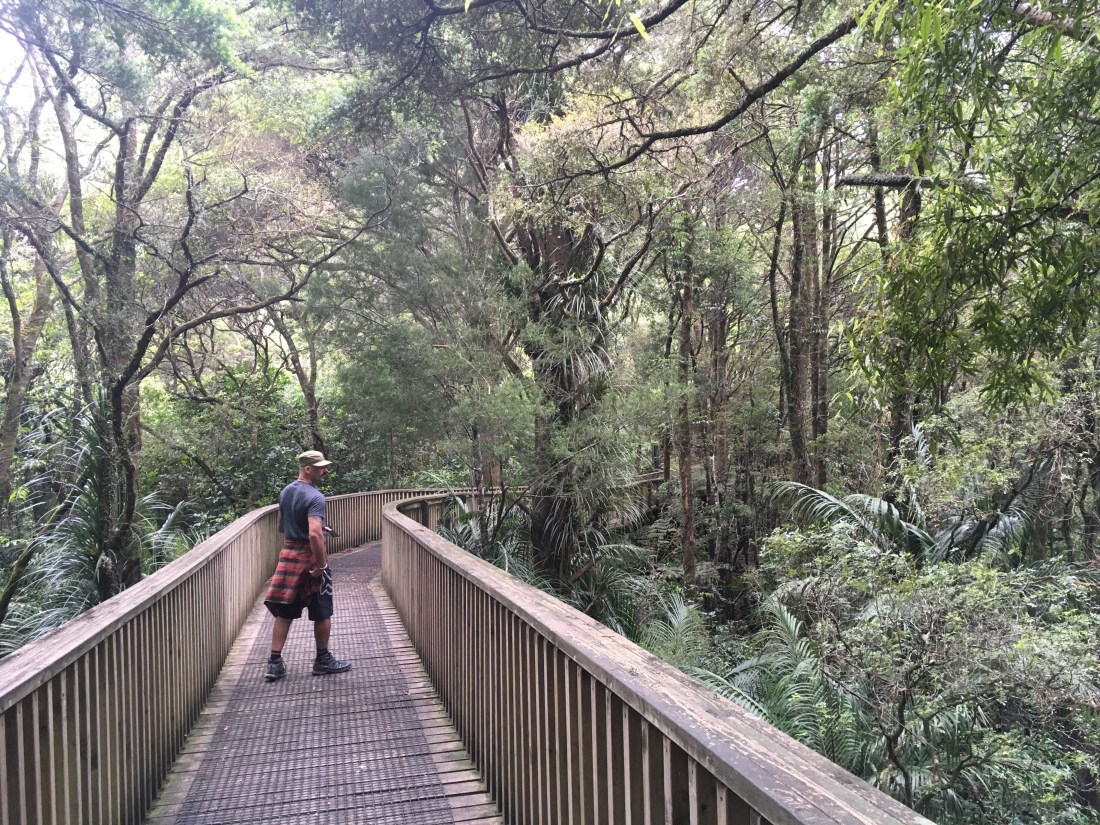
Four hours later, we arrived back at the campsite. Poor old Bloke, not used to this much walking and much happier on two wheels, was pooped, and spent a few hours chillin in the hammock with a well deserved Speights.
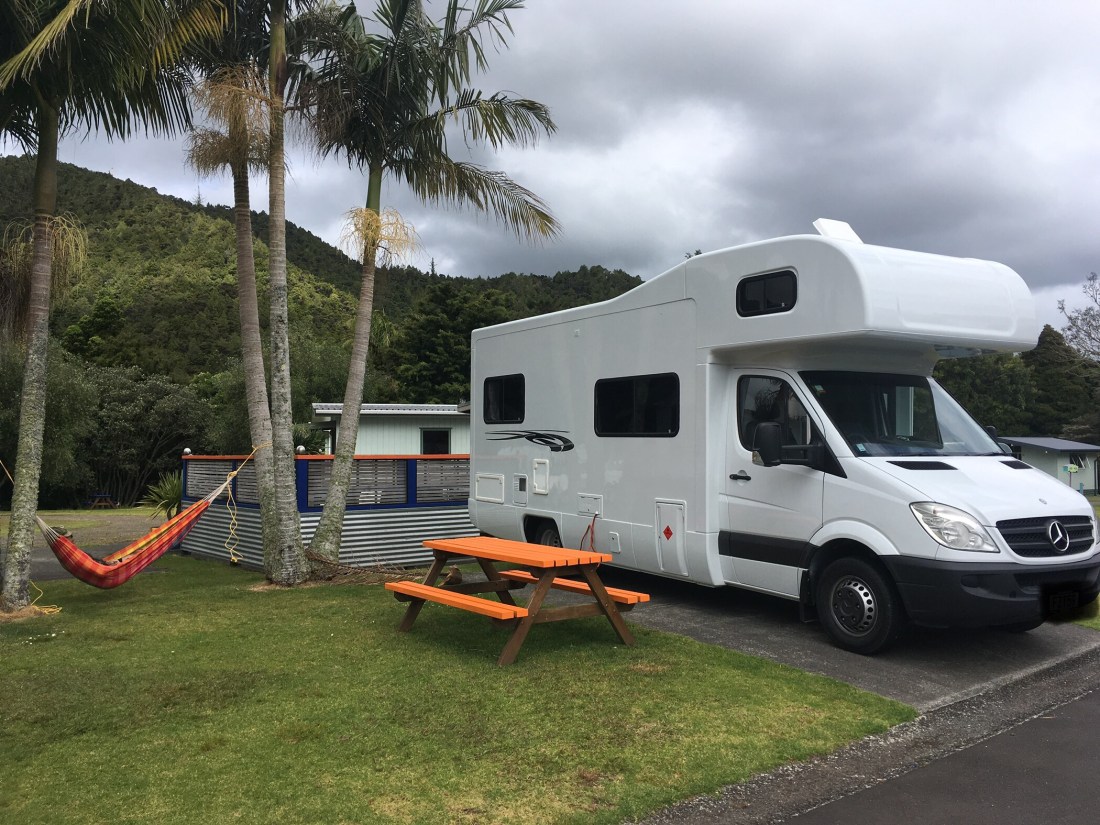
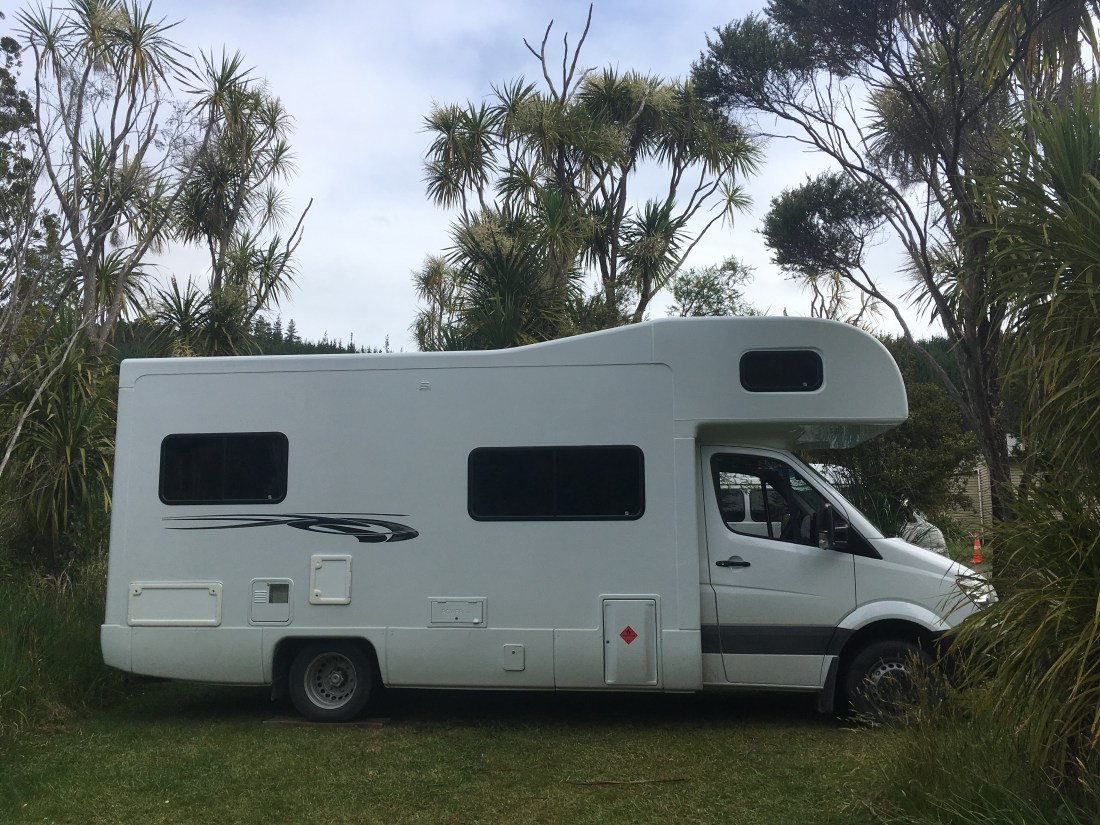
Not a bad set up really, we could get used to this and see how clean Harvey (The RV) is. I’m not sure that it will remain quite so pristine.
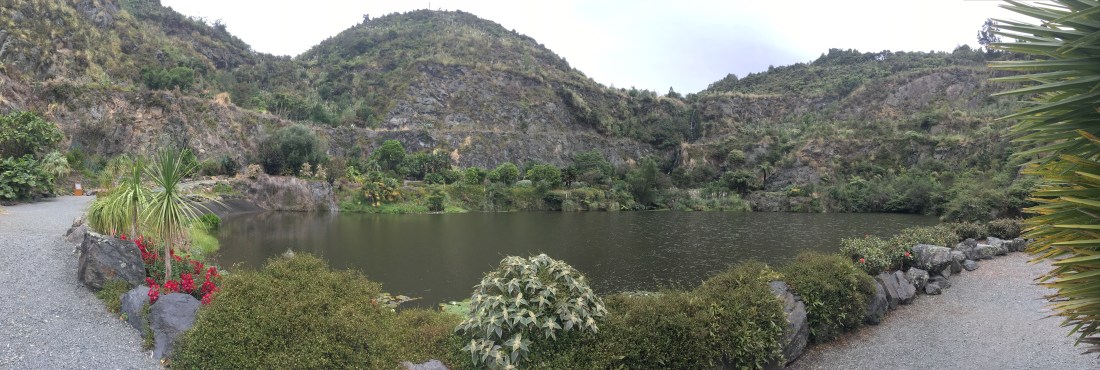
The next morning it was time to move again, so we packed up and headed off to the Whangerei Sub-Tropical Quarry gardens. When we got there it was pissing down with rain, but the nice thing about being in a motor home meant we had a brew and a bite to eat while waiting for the rain to pass, and being British, donned our wet weather gear and off we went. Soon after we left the van, it stopped raining and we had two hours or so of glorious sunshine to enjoy the gardens. They were gorgeous. You don’t need to be a gardener to enjoy these plants. Some simply stunning things to see.
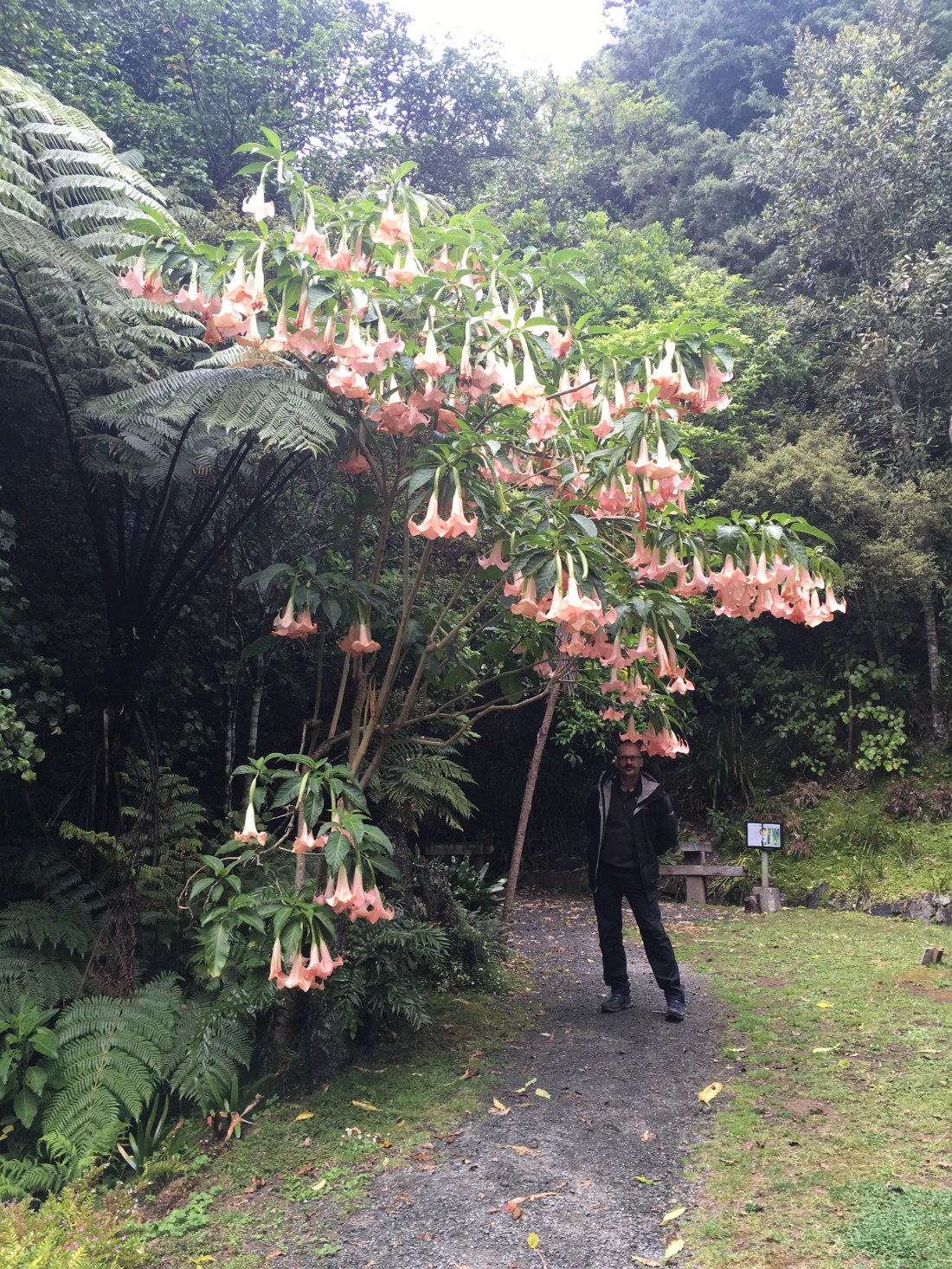 (just check out my hat! :Bloke)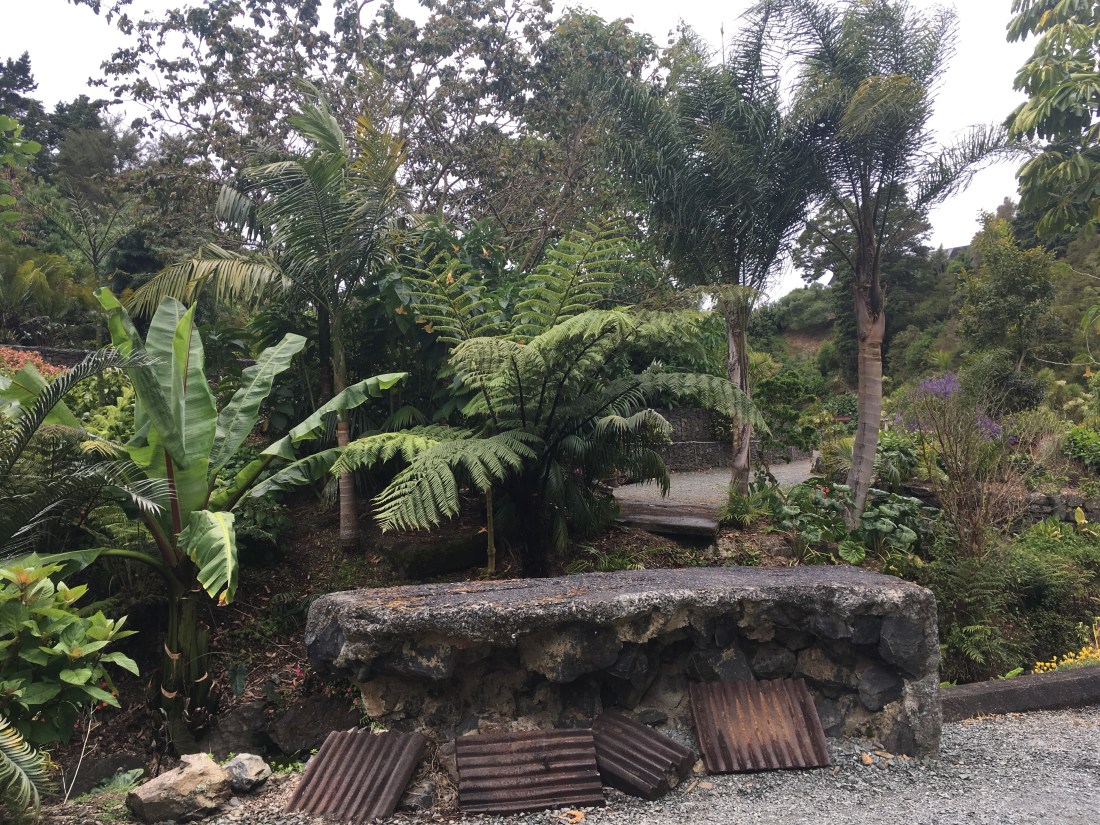
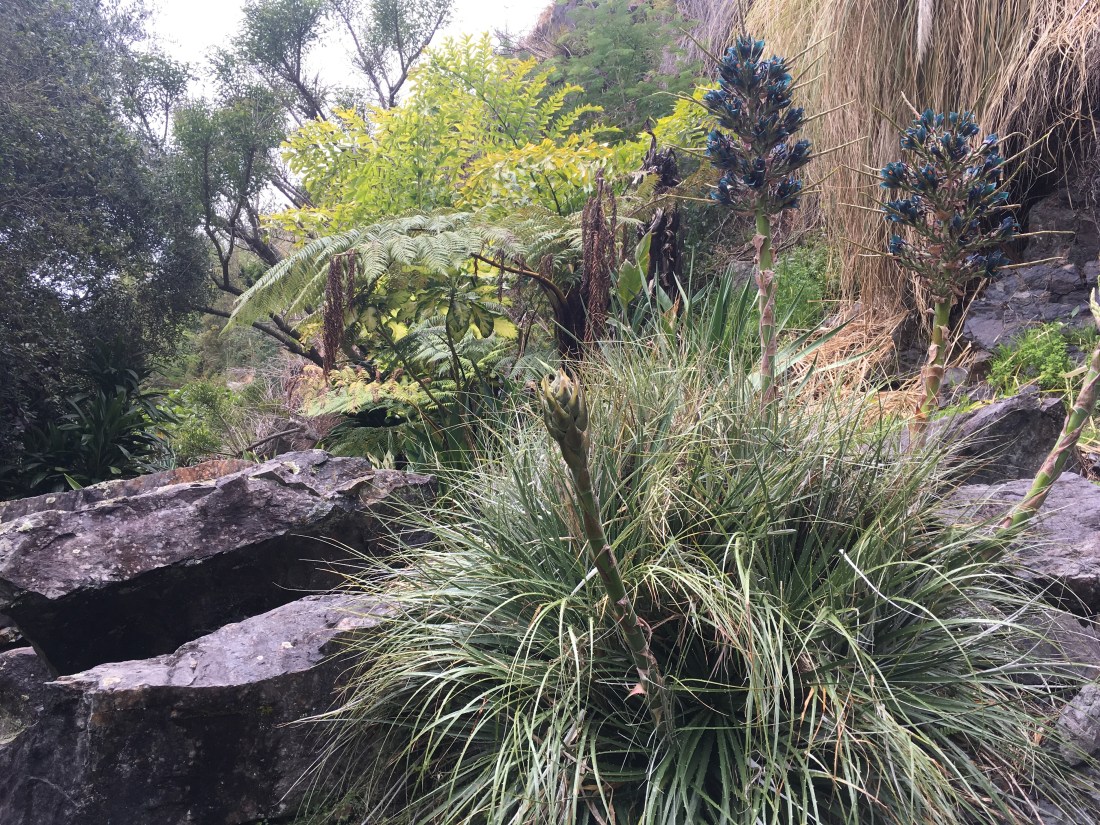 (and these blue /green flowers!:Bloke)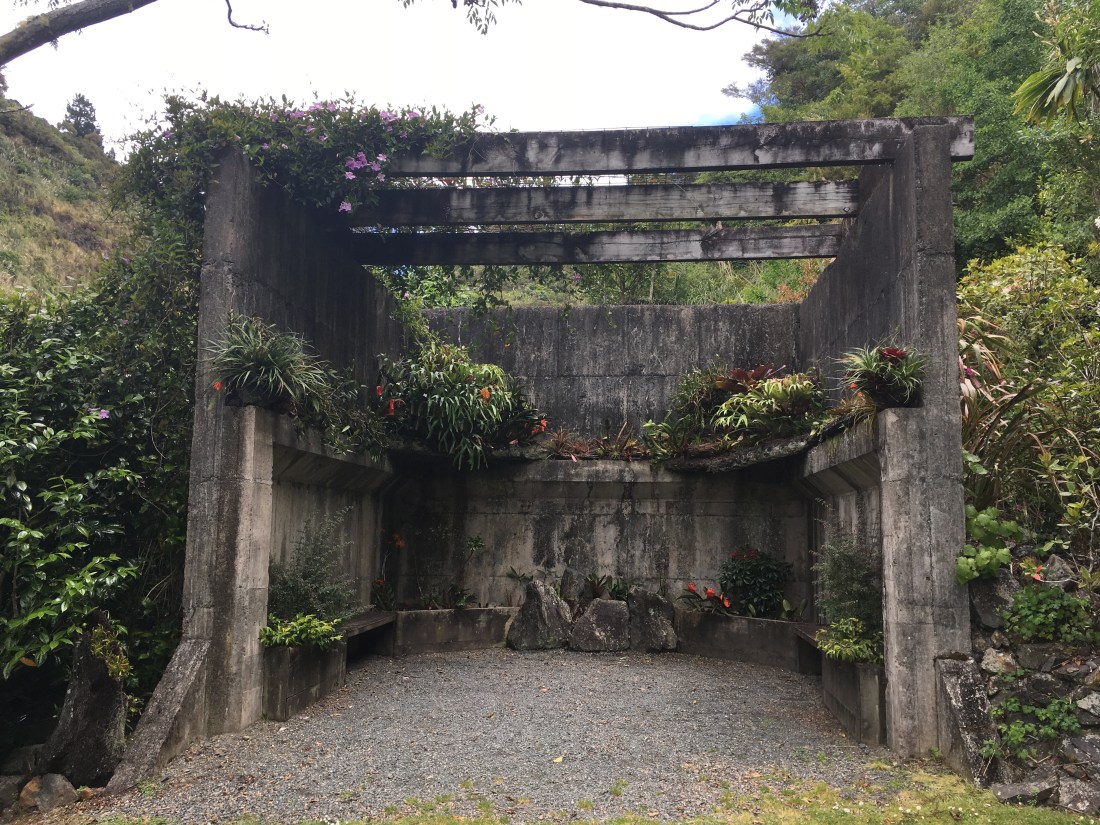
(Previously the site of the gardens was a quarry. The community gardeners made good use of the concrete quarry buildings and other features – like damming the natural steam to make the lake :Bloke)
Back on the road, our next stop was Paihia. Coming into the town, where the rain had been so heavy, stopped and then the sun came out, there was so much steam on the road, it was almost impossible to see the car in front. The temperature dropped as soon as the sun went down and it was our first time to try out the heating in the camper. Thankfully it worked, a little built in electric fan heater, too noisy to have on overnight though, so we had our first chilly night.
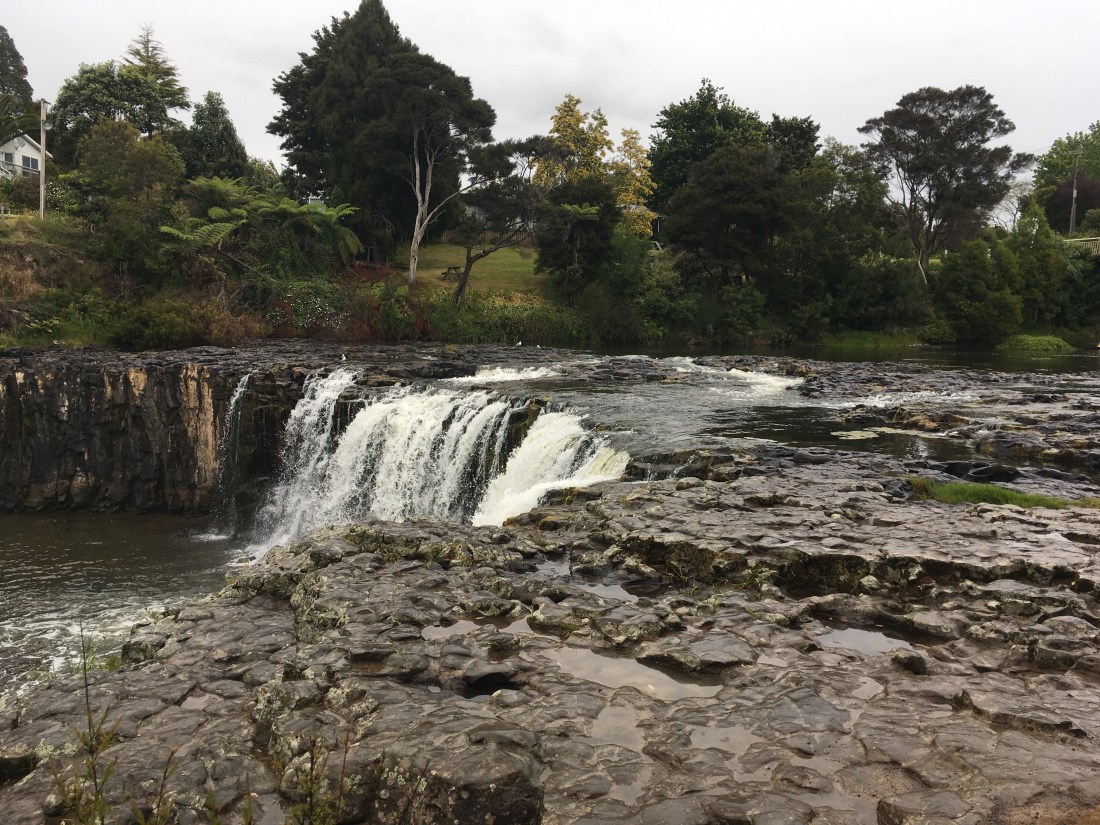
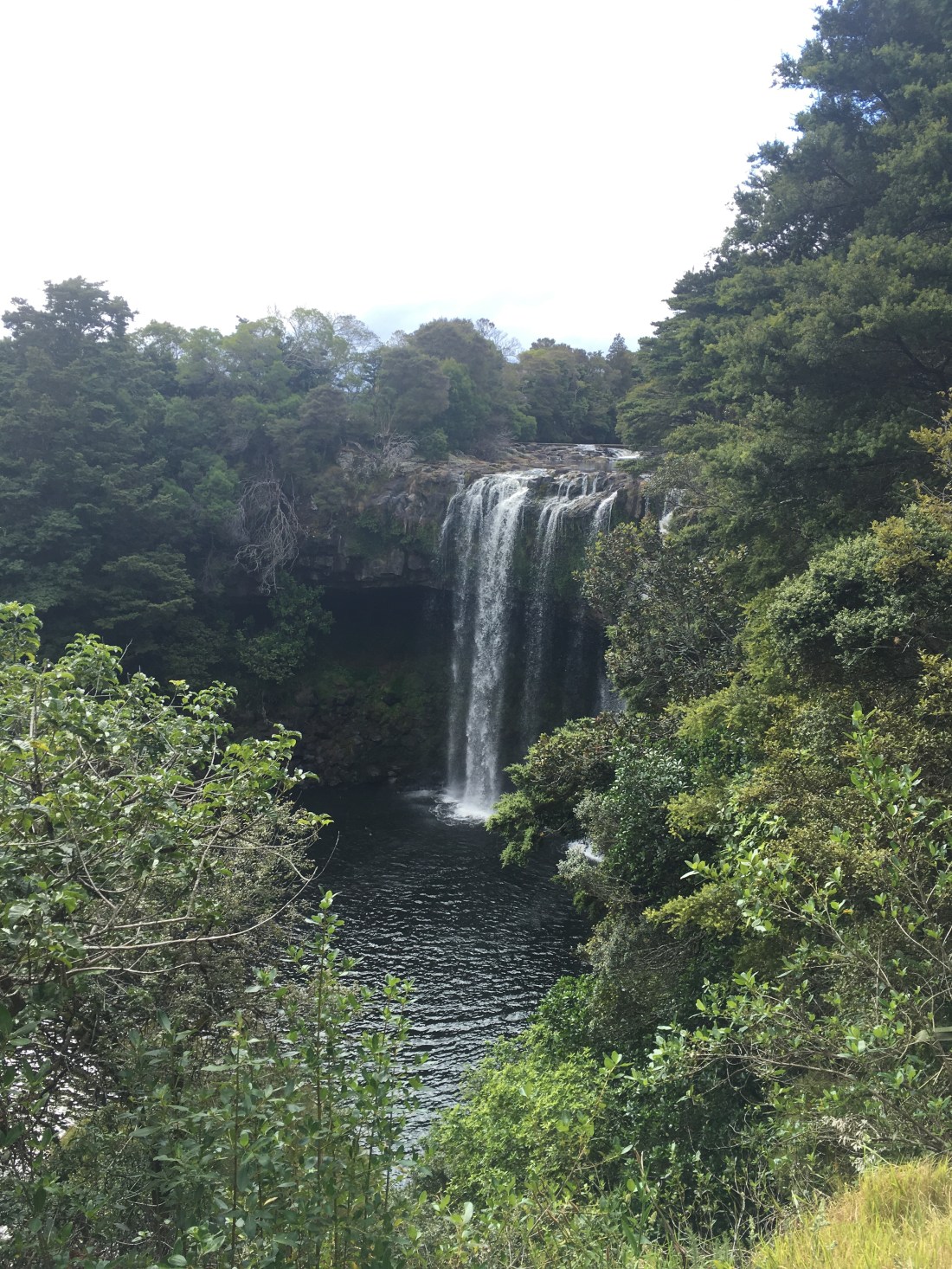
The following morning, on our way to our next destination, we stopped to pick up some blankets. Neither of us fancied another cold night and the long term forecast wasn’t looking too warm. Storms predicted, on and off, for the week ahead. We were fortunate enough to keep missing the rain today, when we stopped a few times to check out more #brownsigns at both Harura Falls and Rainbow Falls (sadly we didn’t see any rainbows though) (rainbows??? There weren’t even shadows! :Bloke)
Part of the reason for wanting to head north was to get ourselves up to Cape Reinga and 90 mile beach, both of which, on many occasions, I’d been told are well worth the visit. We decided to book a guided tour that would set off at 8am from the top of our campsite at Kerikeri. It turned out to be well worth it, it was a long day on the road and I think we both would have got fed up driving the camper up there and back in a day. We certainly wouldn’t have hit the unmade roads at the same speed the bus driver hit them, he obviously knew his route well (unsurfaced roads, curb to curb, 40+mph, in a coach, drifting with Skandi turns. Channelling the spirit of Colin McRae :Bloke) .
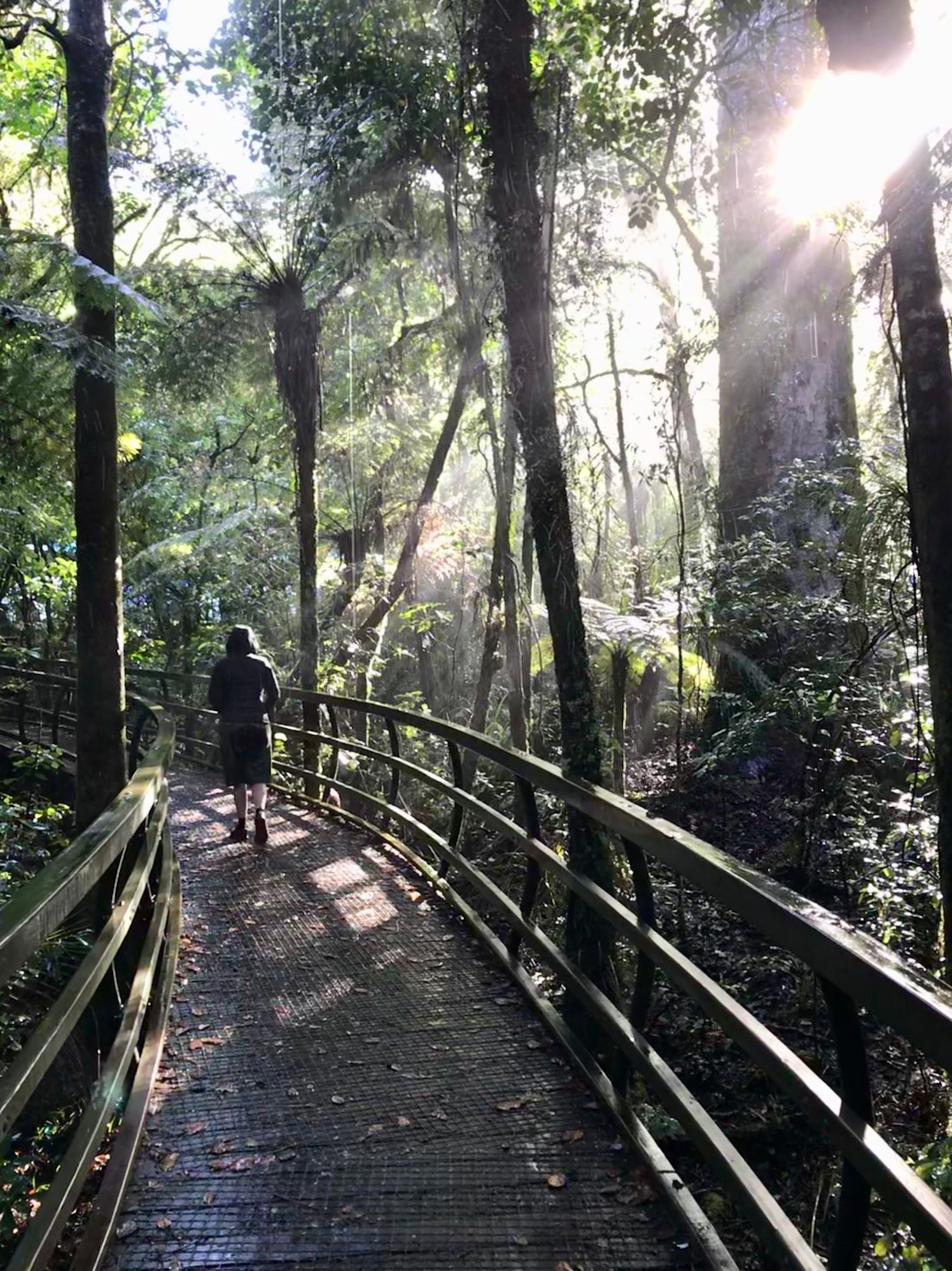
First stop was the Puketi Forest to see the Kauri trees. These trees are a very big deal to the Northlanders, and at one time, the top of the island would have been completely covered in them, but 350 centuries ago, offshore meteorites caused a series of massive tsunami hits, and flattened most of them and over the years they got covered over by dirt. This led to a “gum digging” industry in the late 19th century (we call it a semi-precious stone – amber. :Bloke). When the first settlers arrived on the Northland they used the standing trees to build their homes and boats etc, therefore many more were lost. These days, few large trees remain, but they are all protected now and the local people are working very hard to look after them and regenerate the forests. They are extremely strict about people entering certain forest areas and it is necessary to clean footwear on entering and again, on leaving the forests. No dogs are allowed in most areas, to also help protect the wildlife, specifically the endangered Kiwi bird. In the areas we covered today, the early settlers found the buried Kauri trees, as they were so well preserved, and lifted many of them to make furniture and other household items (it’s is still “wood”. It’s not silicated/fossilised like long buried trees in other places :bloke).

On the way to 90 mile beach, which is actually only 56 miles long, (originally measured by Captain Cook from sea, and later found to be quite incorrect), we suddenly left the main road and our bus started driving through a stream in the sand. The driver stopped at the bottom of a pretty decent sized sand dune and opened up the baggage area, revealing a load of boogie boards and told everyone to grab one and give the dunes a go. Bloke was up and out, board under arm and at the top of the biggest dune before most of the rest of the folks were even off the bus (about 80m high, the view from the top was amazing! The sand falling away to sea on oneside, the sand marbled by part-drying from the rain… I didn’t take a camera though so you’ll have to use your imagination. :bloke). He had a blast! (Top speed was 34km/h according to the GPS log :bloke) I opted out, deciding instead on playing safe and risk management to my knee. (I’ve since had two days of not wearing a knee support at all, granted I’ve not done anything too strenuous on it, but it’s an improvement nonetheless).
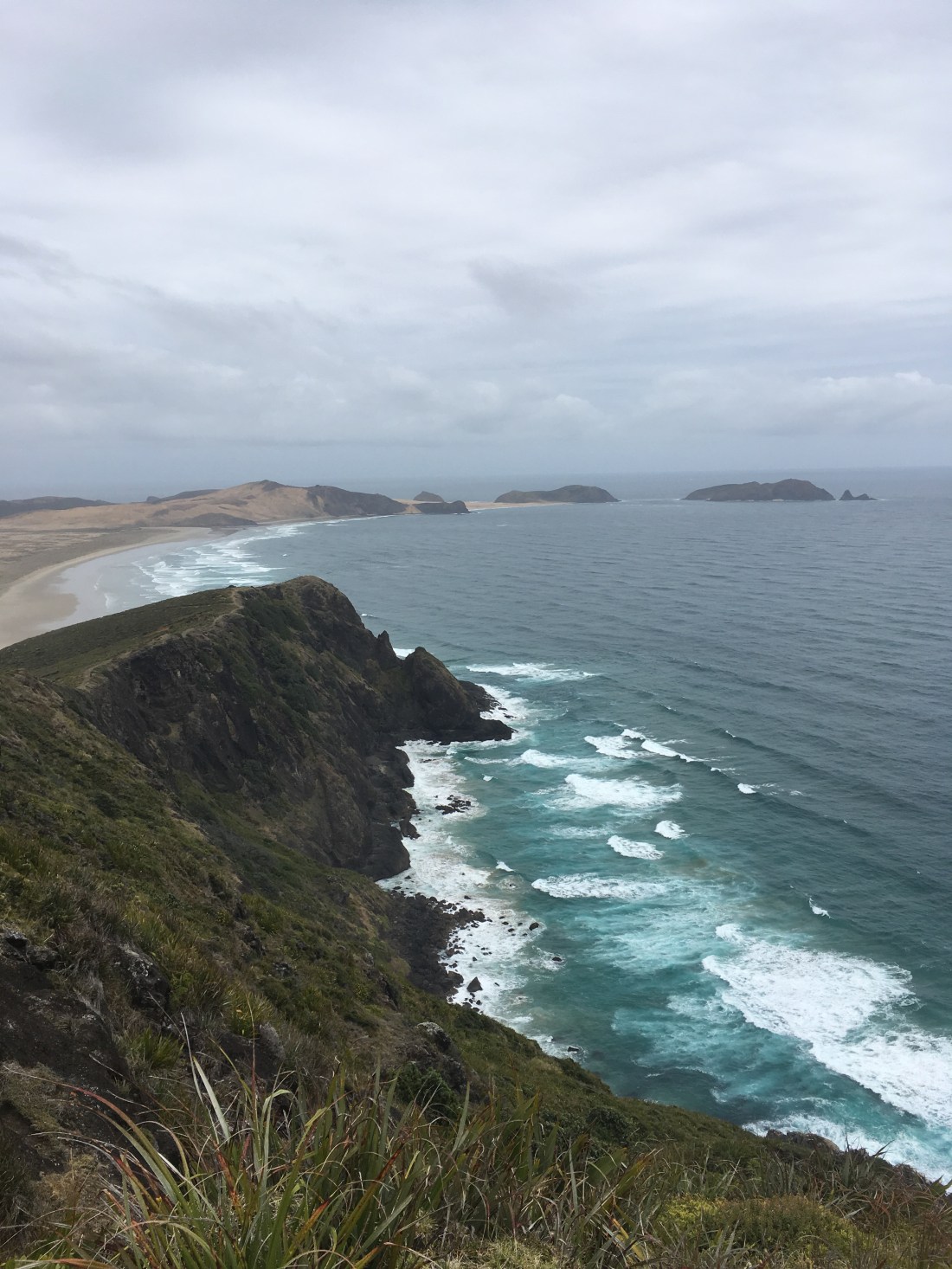
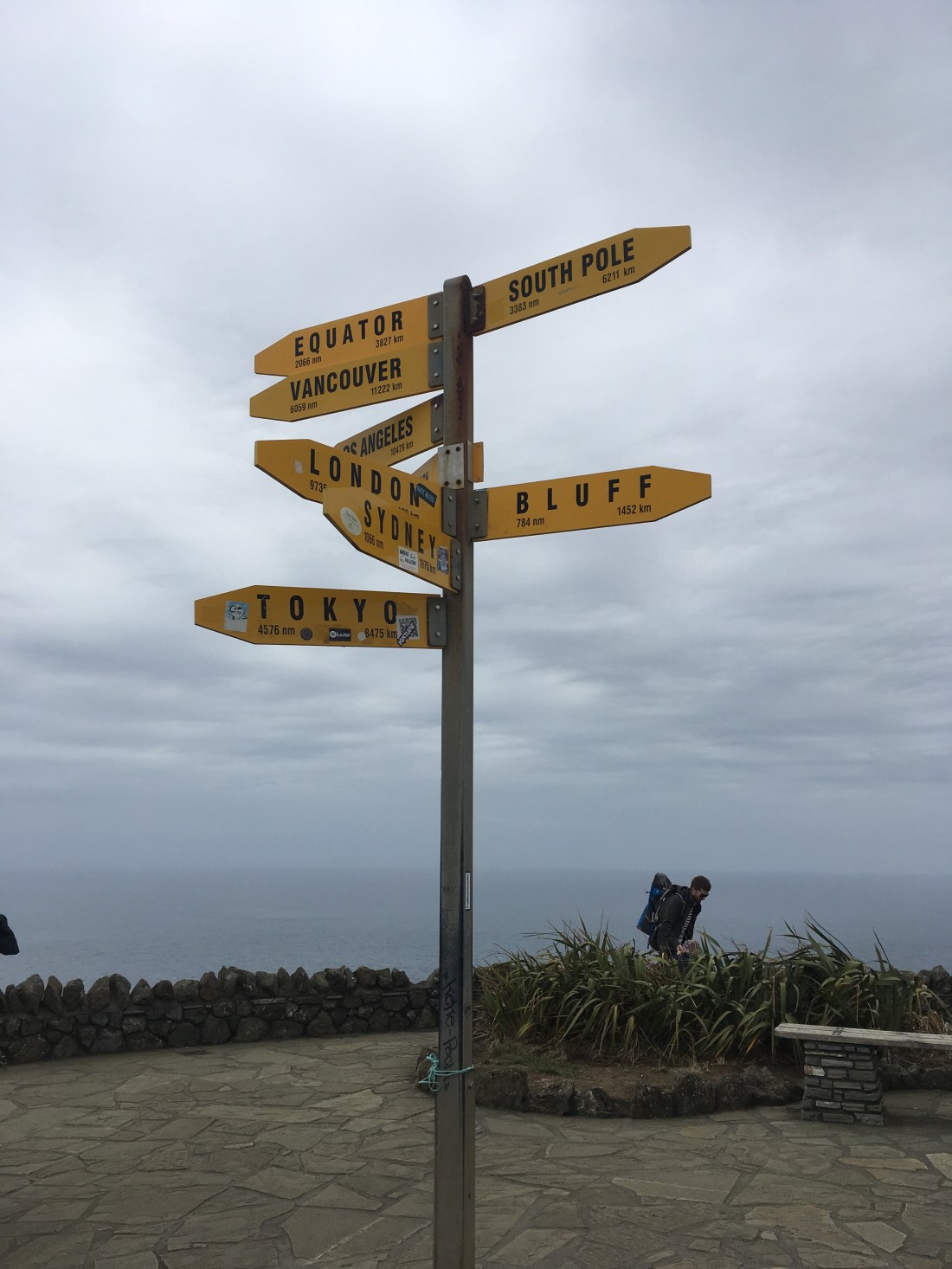
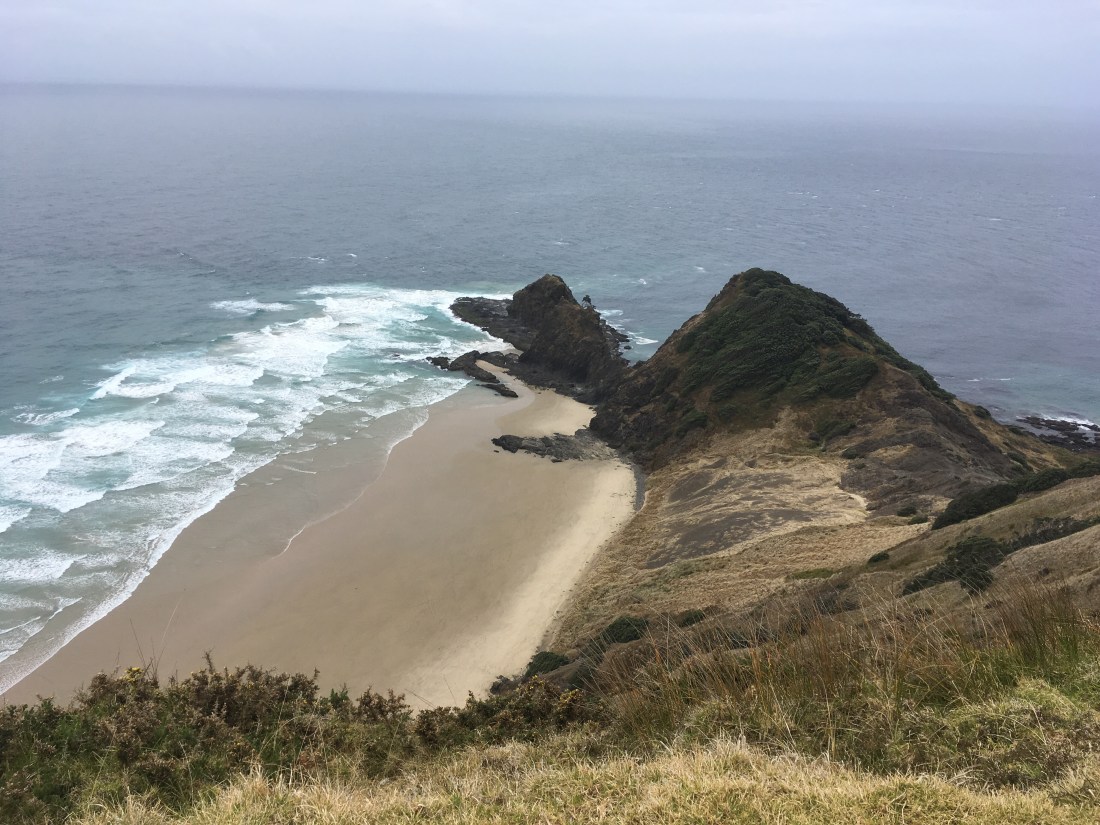
Several runs later, we were back on the bus and headed right to the top of the North Island, to the lighthouse at Cape Reinga. It was a nice walk down to the lighthouse, full of people, which is unfortunately the way with these things, but nice all the same. Although a bit of an overcast day, you could clearly see where the two seas merged, giving a definite colour and tidal deferential.
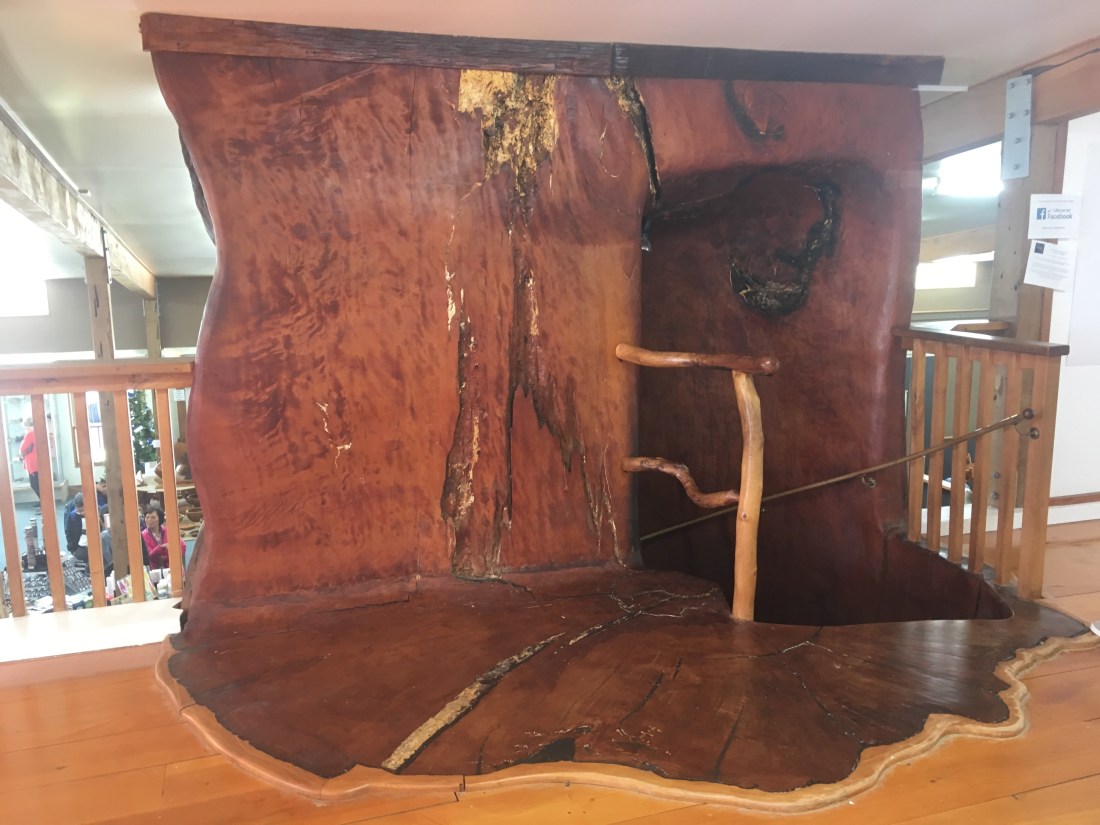
Our last stop of the day was in a place called Awanui, to check out an enormous piece of Kauri tree that had been turned into a staircase, in a shop/gallery.
The following morning we left Kerikeri and decided to head over to the West Coast for a few days, Blokes’ Kiwi friend Lisa had told us about some enormous Kauri trees that were worth a visit. She wasn’t wrong…
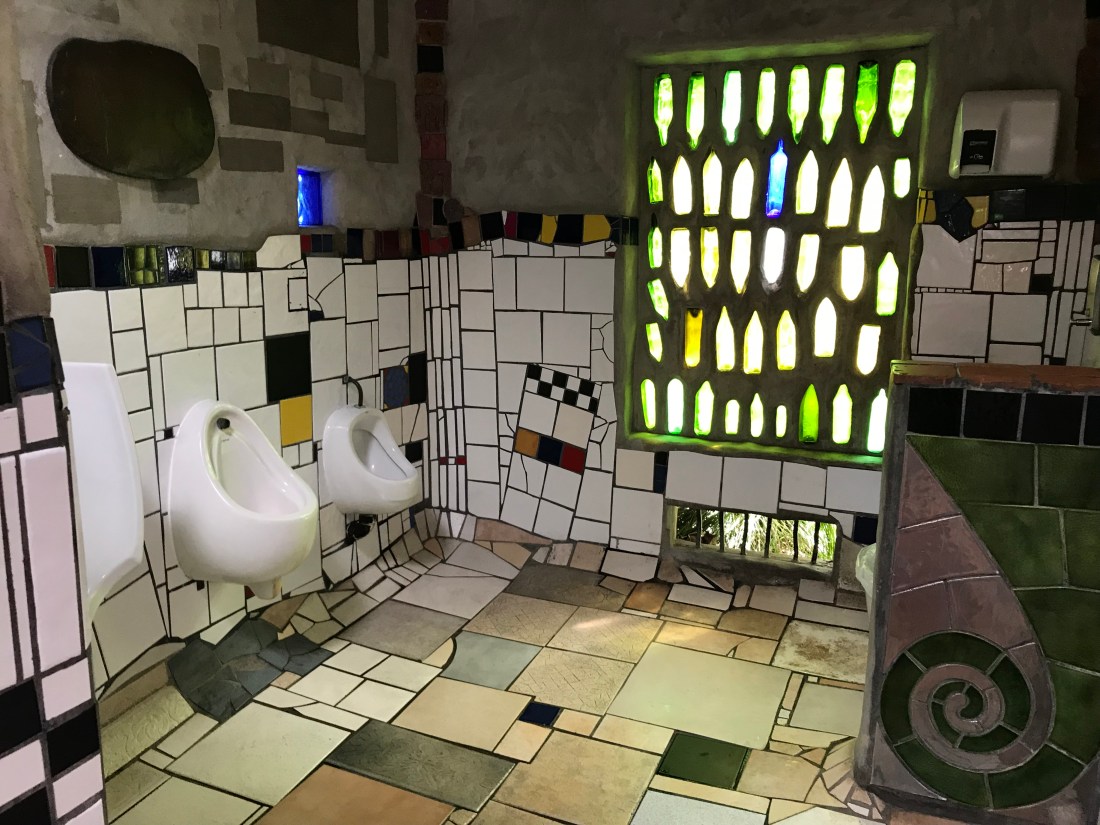
First however, it was on to Kawakawa, on my sisters recommendation, to check out the town toilets. Yes I did say toilets. I know, I thought her predictive text was playing up too, but no, she had meant it. They were amazing I have to say. I’ve never seen anything quite like it. Made predominately from mosaic, they were absolutely brilliant and incredibly beautiful.
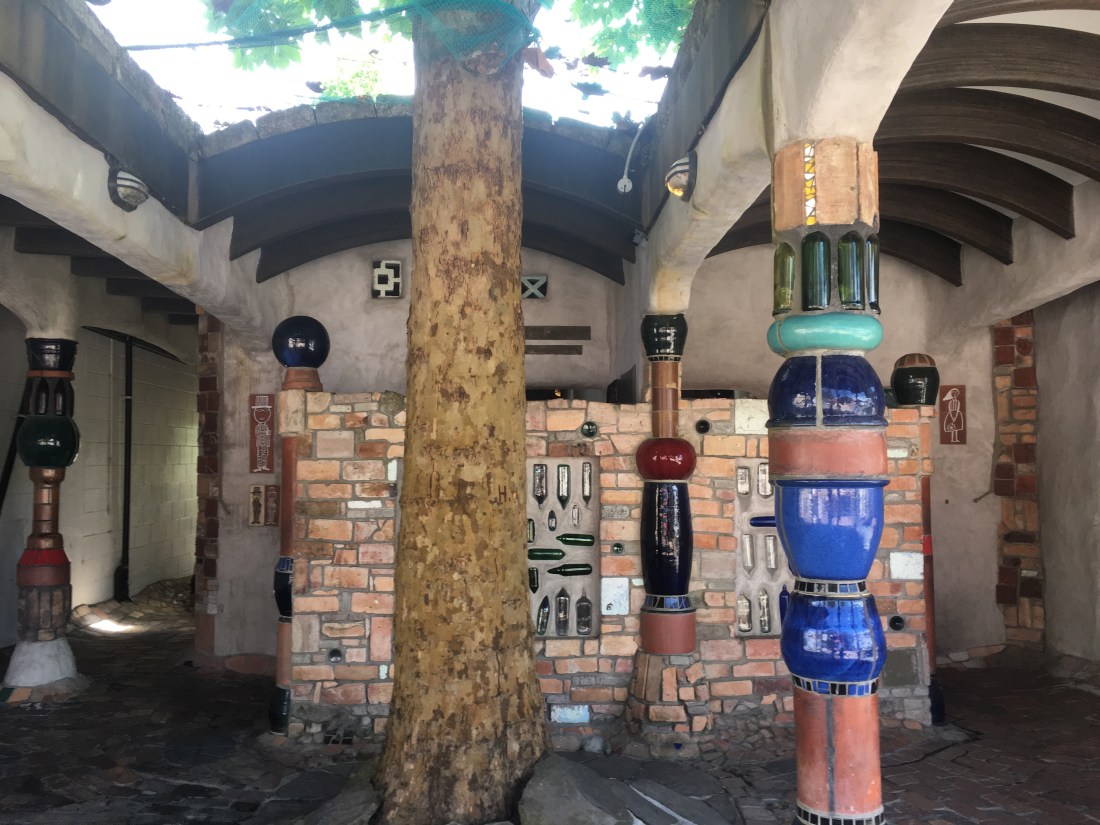
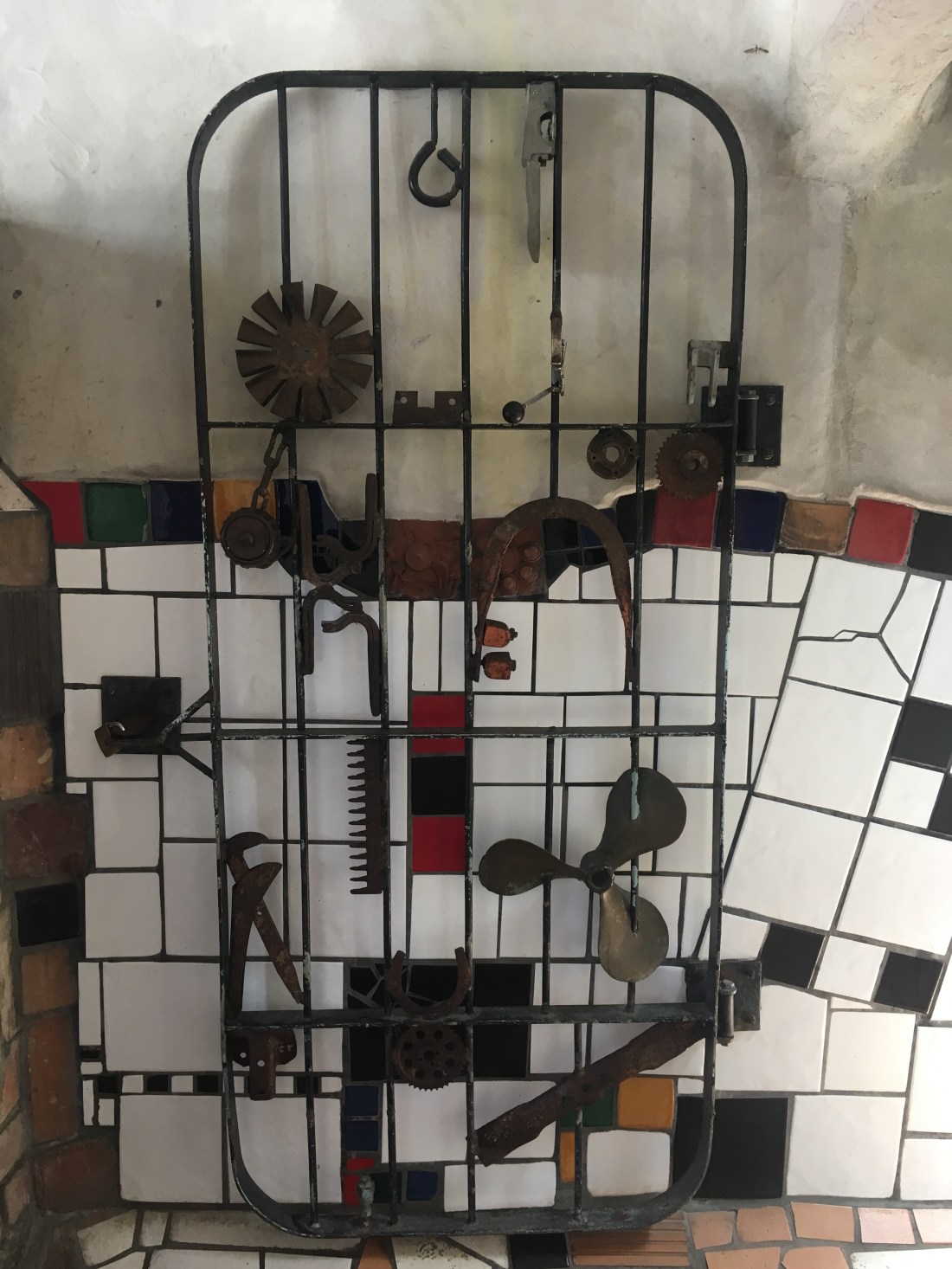
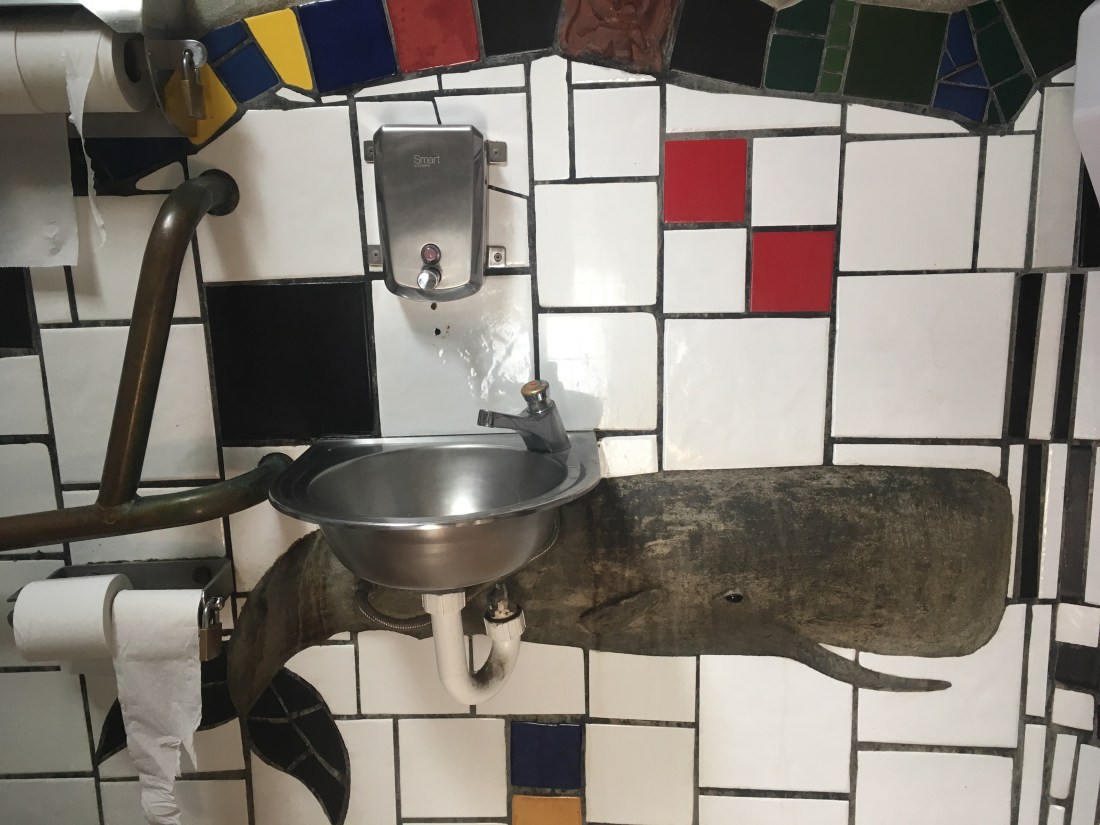
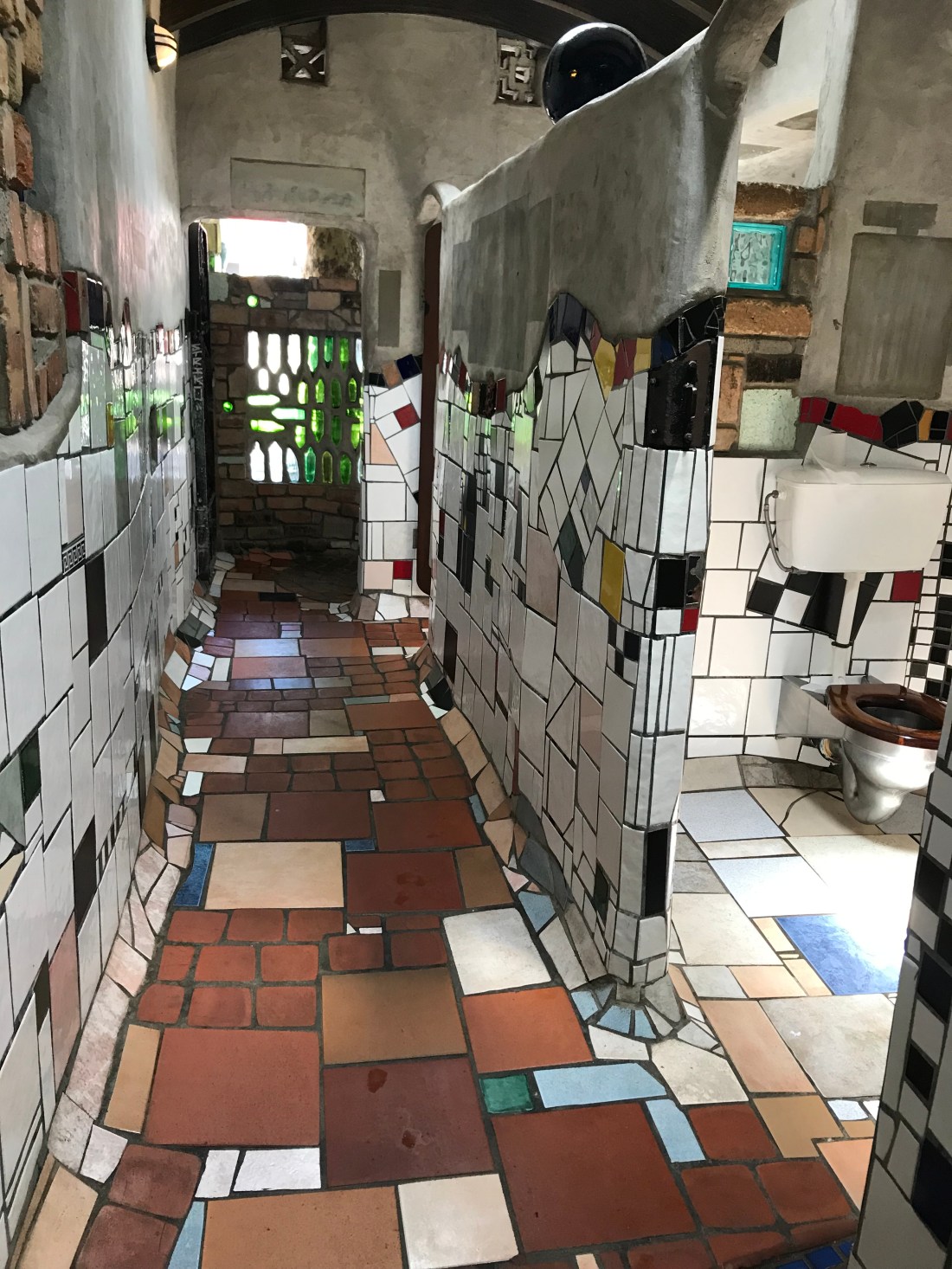
But it wasn’t all about the toilets either, they had a fully working steam train (although today only the diesel engine was running) that actually went right through the middle of the town. The station was really pretty too.
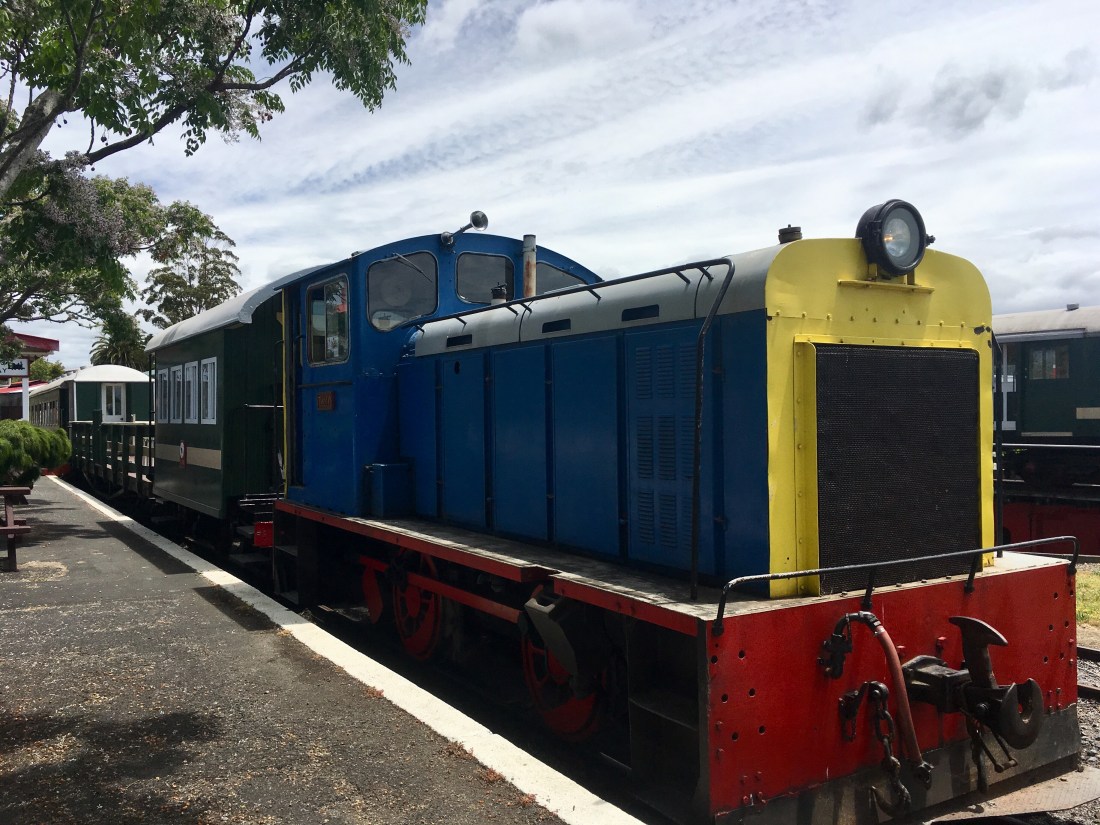
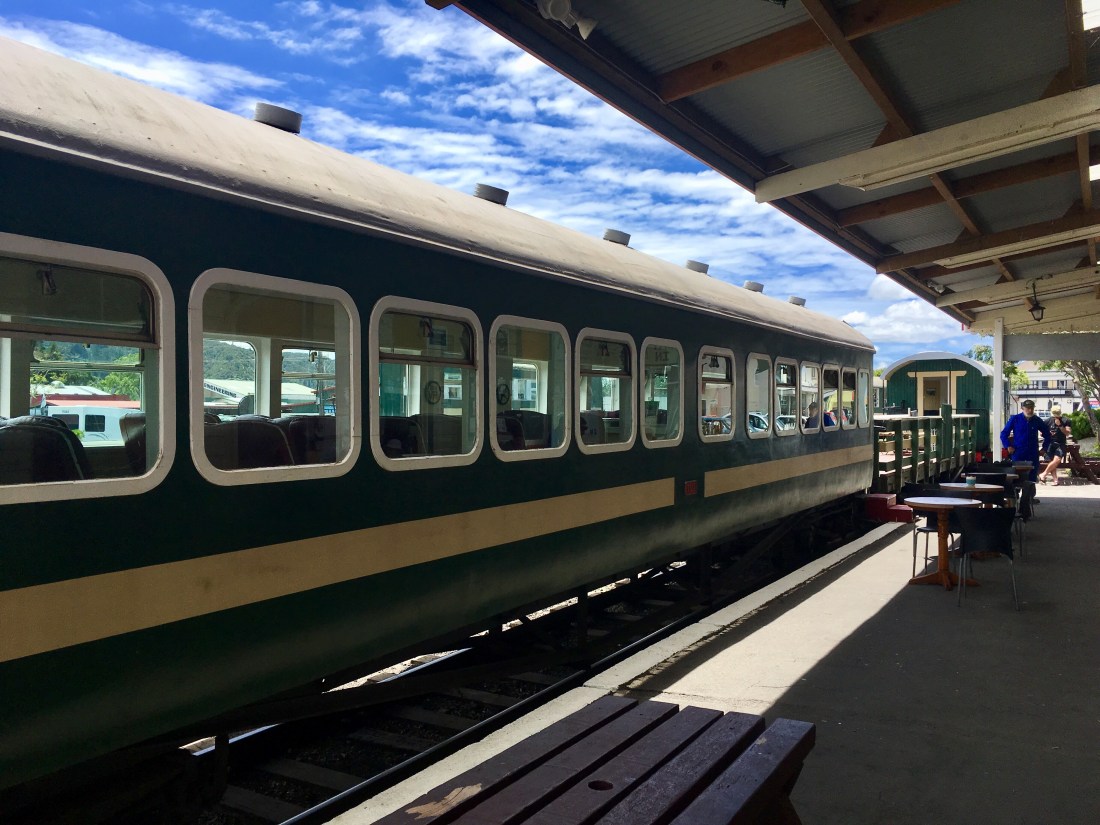

After the excitement of the local conveniences, we moved on to Waipaura Forest, stopping briefly for a leg stretch and a brew, at a beautiful little cove, thanks again to another #brownsign.
The West coast is stunning in places, really rugged with vast areas of rainforest and appears to be much less populated than the East Coast. It wasn’t too long before we found what we had come looking for, the Tane Muhata. The largest (by volume) living Kauri tree – somewhere in the region of (reports vary we’ve noticed) 2000 – 2350 years old. It is massive!!! Too big to actually fit the whole thing in a picture and even then, the pictures do not do it justice.

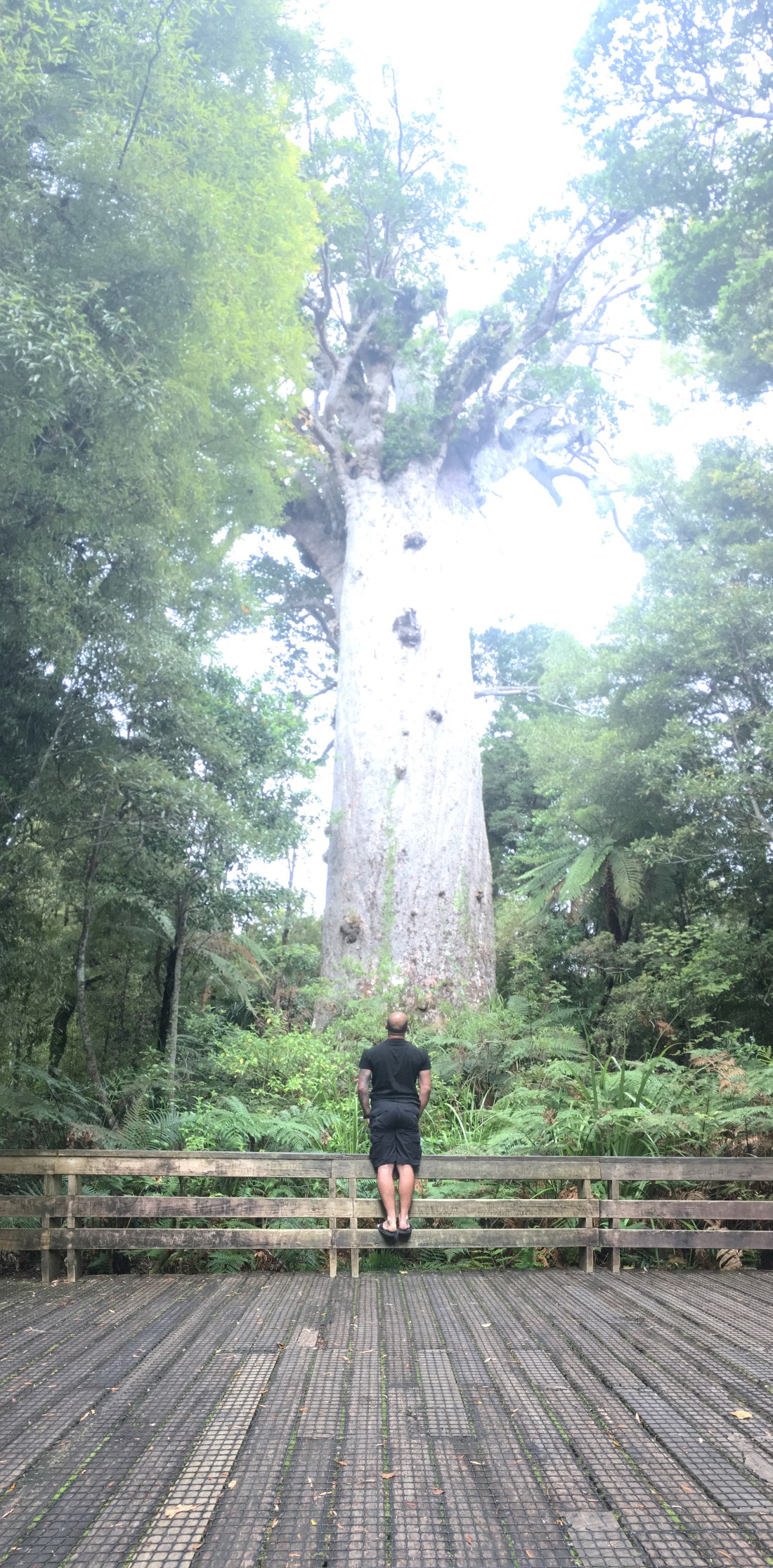
We spent the night in a fairly basic camp site, in the forest, not far from the trees we’d come to see. It was such a nice area, down by a river, with a swimming area, (had it have been warm enough to try it out). It poured down with rain overnight and after watching a few of our neighbours struggle to get their smaller vans off the grass pitches, we wondered if we were going to be stuck there all weekend. The camper pulled away no problem at all, (obviously blokes driving skills came in to play, so I’m told), and we were free to double back on ourselves slightly to go and look for the two other sites of the Kauri we had come in search of.

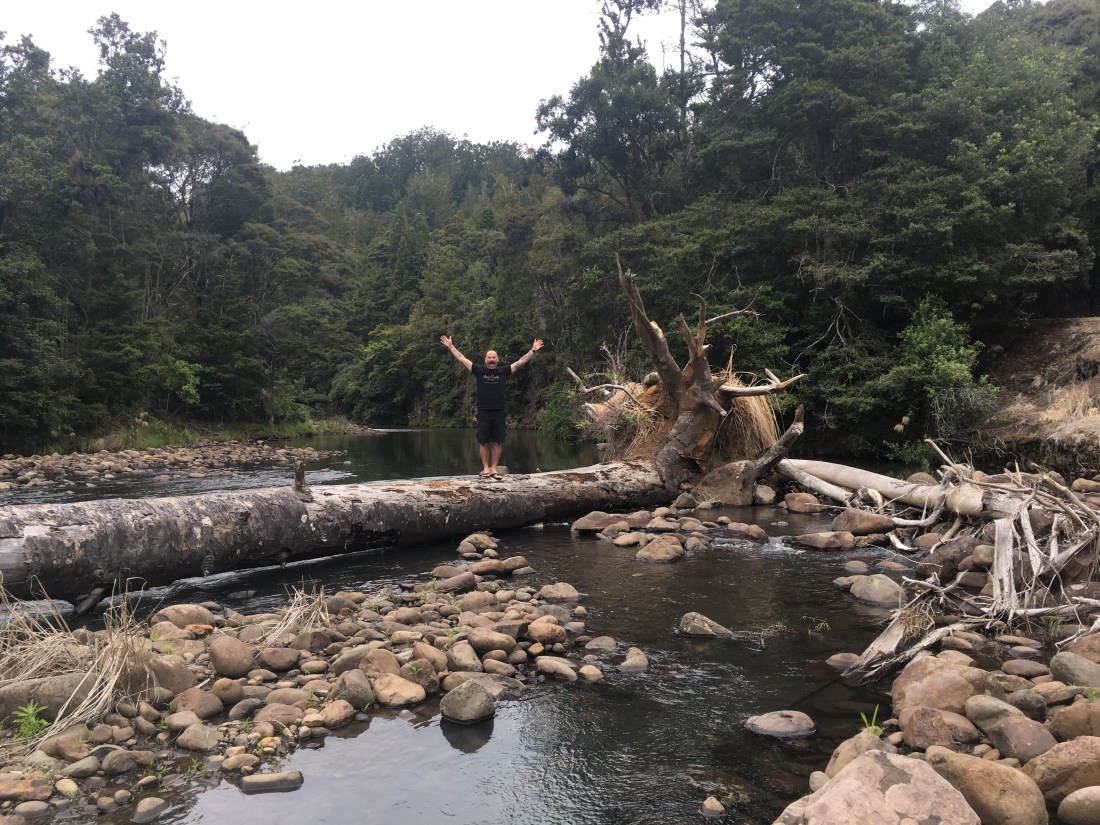

Firstly it was the Four Sisters, a group of four trees growing very closely together (not an inconsiderable amount of fire wood… :Bloke) and then on to the most impressive one to date, the Father of the Forest.
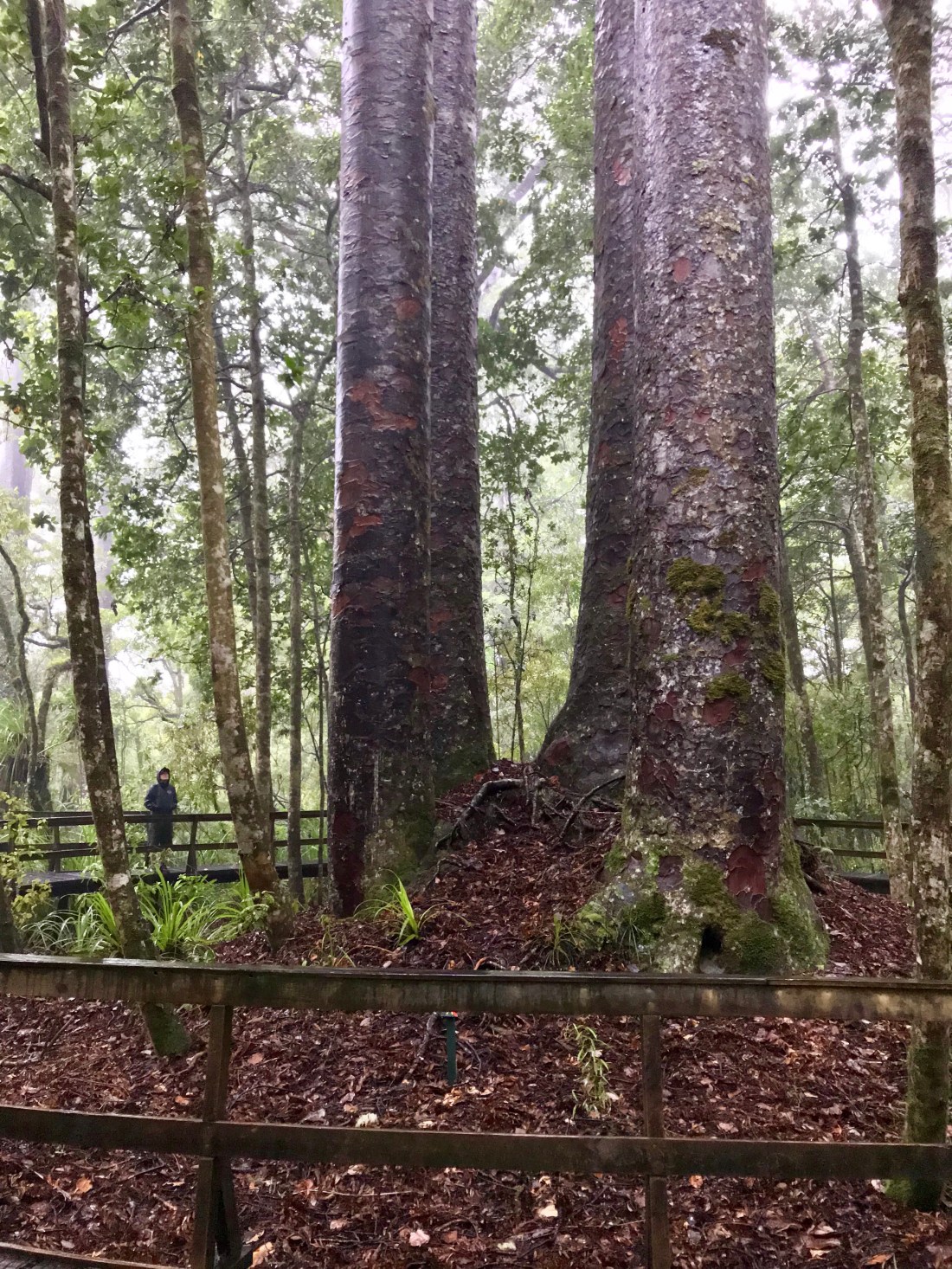

This thing is a monster and well and truly worth the 45 minutes of walking in the pouring rain to see it (my photo does simply not do this goliath justice. It is enormous. 6m across! :Bloke). We were soaked to the skin but so pleased that we hadn’t missed out on seeing these trees, it really is incredible to stand near to these giants. They are the second biggest trees in the world, after the giant redwoods of America. (Many of these trees were felled by settlers early in the 20th century. They brought newly invented bulldozers to move the massive logs. The Kauri have an ecosystem living on them, airplants, vines, ferns, even manuka/tea-trees! Also, When the trees get this big, they start to get hollow. I wonder where the idea for the movie “Avatar” came from 🧐 :Bloke) And heading back down to Auckland this afternoon, we stopped at a Kauri Museum in Matakohe, to learn a little bit more about them. Now I quite like a museum from time to time, but I wouldn’t say I was a huge fan of them, but what I will say about this one is, if you love your big trees, early machinery and chainsaws, this is the museum for you. It had it all, I really enjoyed it. There was also a lot of history and artifacts from the early settlers, including a full size boarding house. Next to the museum was the Old Post Office and opposite, the odd Chapel, all full of original features and artifacts.
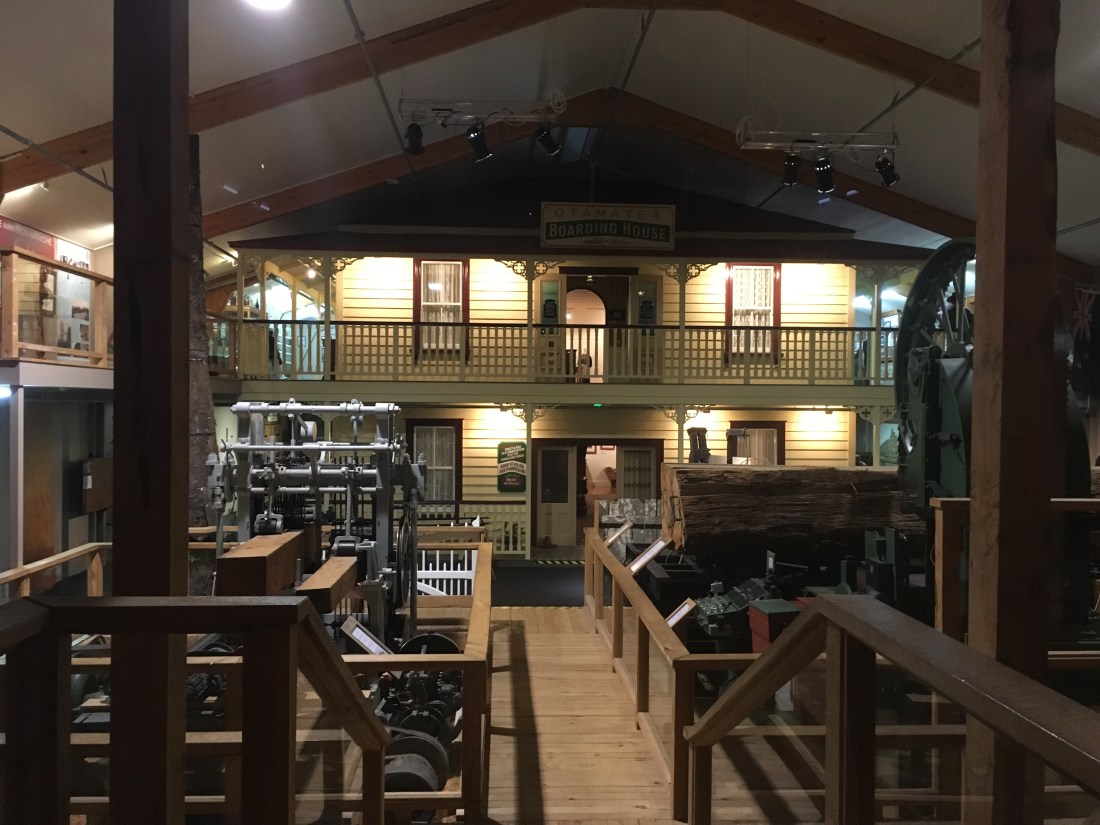
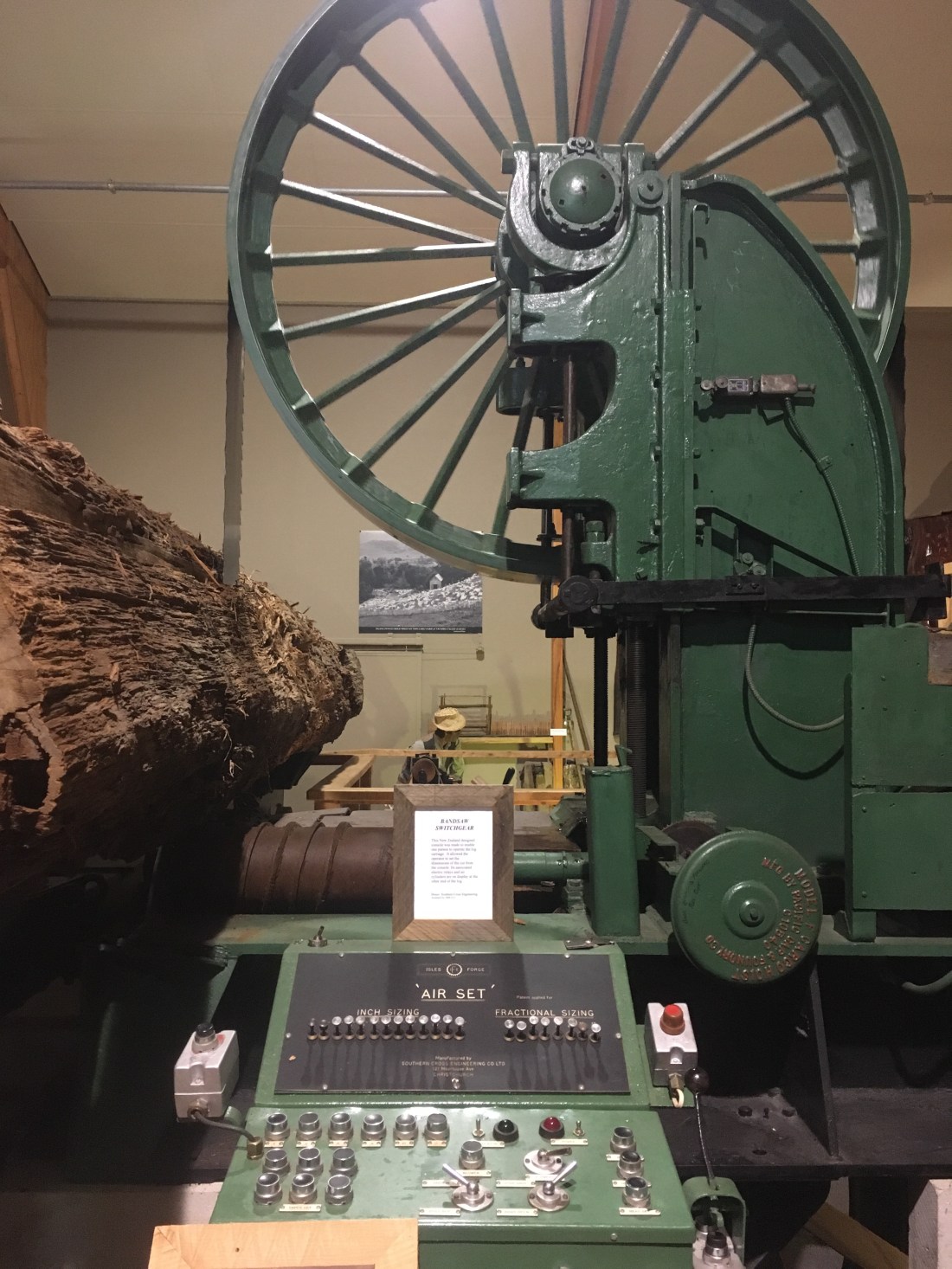 (a “high tech” bandsaw. Just goes to show what the wood was worth, if they were prepared to literally sail this very heavy equipment from the uk. Some of the biggest chainsaws known to arboreal engineering and some very pretty racing axes -not shown :Bloke)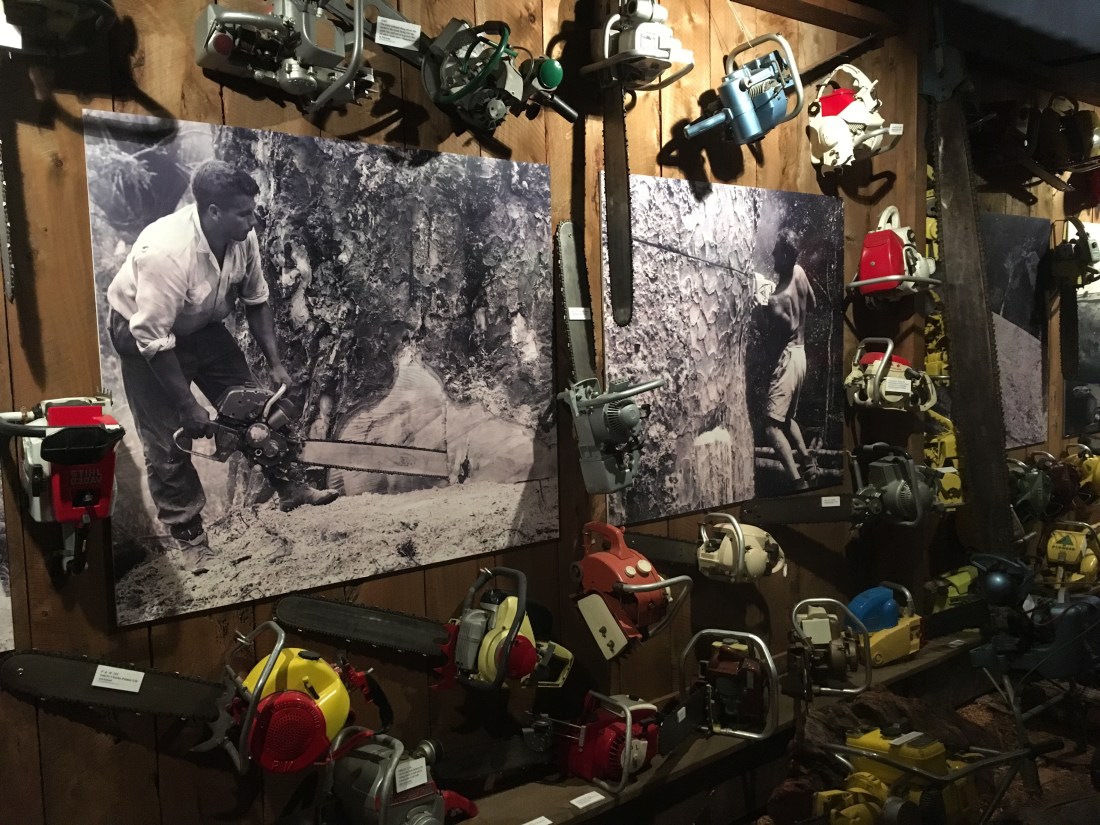
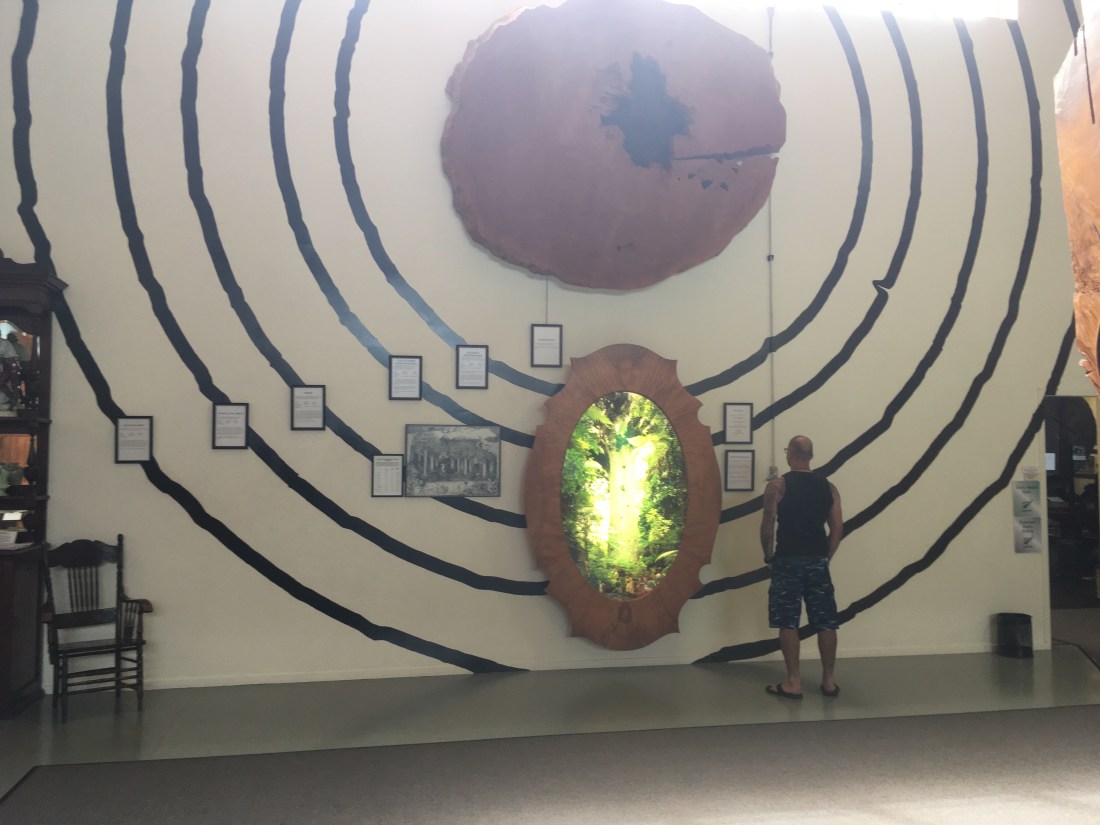 This gives you some idea of the scale of the largest Kauri trees recorded. (The ones we saw standing were the two innermost rings of this display. Such a shame to have lost the other trees to old age and Bush fires. :Bloke)
So after a week, we have come full circle and are back at the first campsite we stopped at for two nights. The weather is supposed to be pants for the next few days, but we’ve been reasonably lucky all week so maybe our luck will continue. We’ve finally heard from customs, our bikes have been cleared and we should be able to pick them up on Monday. Yay!!! After trying to charge us tax (at 15% of the INSURED value!! :Bloke) on them, they finally decided to open the boxes and indeed find exactly what we said was in them, (two used bikes, battered body armour, old trainers, well used rucksacks and dented helmets, all used, but cleaned to within an inch of their lives…who’d have thought 🙄). Bloke is chomping at the bit to get into his training for the enduro he has entered in February (I’ve even had to go running!! 😱😱 :Bloke), and we are both looking forward to being reunited with our bikes, it’s been a month since we saw them. I’m not even sure I remember how to ride!

 Adventures of a middle aged mountain biker